






Legal Disclaimer: This article provides general educational information for hospitality operators. Licensing laws vary wildly by state, county, and municipality. This content does not constitute formal legal advice. Always consult a qualified local administrative attorney before signing commercial leases or purchasing assets.
Opening a bar is challenging, and the one license that seems to take the longest to obtain is the liquor license.
Hopeful bar owners often design beautiful bars and plan delicious cocktail menus, only to face the sobering reality of waiting months for the state to approve their license application.
A solid understanding of the relevant regulations is critical for anyone planning to open a bar.
After all, it is the only solution that lets you plan your future business while protecting your budget.
The following paragraphs offer guidance and insights.
Below are some of the critical factors to consider when acquiring a liquor license for a bar. It is a complicated endeavor, and there are much more to it than meets the eye.
Key Takeaways
- Primary Financial Risk: Capital can be tied up for 6–12 months before you pour a single drink.
- The Core Document: Your bar business plan must explicitly match your license type to secure funding.
- Hidden Dealbreaker: Local zoning approvals (CUPs) are often harder to get than the state license itself.
The Two Core Variations: On-Premises vs. Off-Premises
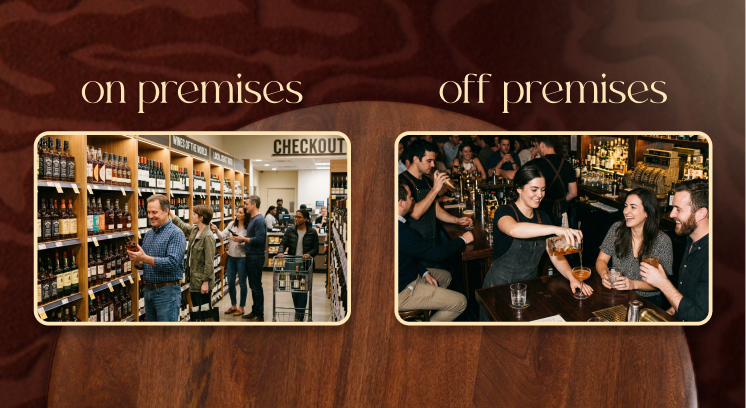
Before you file a single sheet of paperwork, you have to pinpoint exactly how alcohol will be consumed at your venue.
Administrative boards generally divide permissions into two primary categories.
· On-Premises Licenses
These are for bars, taverns, restaurants, and nightclubs. Here, patrons purchase and further consume beverages within the property’s physical boundaries.
Moreover, they are typically more expensive and face greater regulatory scrutiny because of public safety, noise, and occupancy concerns.
· Off-Premises Licenses
Secondly, these apply to liquor stores, boutique bottle shops, and supermarkets where customers buy alcohol to consume elsewhere.
While operational oversight is slightly less intense, zoning restrictions on proximity to schools or places of worship can be very strict.
So, you must avoid choosing the wrong classification early in your planning phase.
Or you might waste months of administrative progress.
If your goal is a high-end lounge, you are firmly in the on-premises category, which demands a highly detailed operational strategy.
The Financial Landscape: What Does a Liquor License Actually Cost?
The cost of obtaining permission to sell alcohol is rarely a fixed government fee. Instead, it is dictated by supply, demand, and state-level regulatory philosophy.
| State Model | Pricing Mechanism | Estimated Cost Range (USD) |
|---|---|---|
| Open States (e.g., NY, TX) | Direct state issuance based on meeting set qualifications. | $1,000 – $5,000 |
| Quota States (e.g., CA, FL, PA) | Strict caps based on county populations; requires buying on the open market. | $50,000 – $500,000+ |
In open states, the primary barrier is patience and meticulous paperwork. In quota states, however, the process mirrors buying commercial real estate.
You must buy an existing liquor license from a broker or an operating business looking to exit. This is because the state limits the total number of permits available per county.
I have seen operators in California forced to shell out over $250,000 just for the right to serve spirits, completely altering their initial capital expenditure models.
How To Integrate Licensing Into Your Bar Business Plan
They will not finance your project on the assumption that you will work through the details of licensing and regulations in due time.
Both your pitch deck and internal planning documentation need to demonstrate a degree of specificity in terms of your approach to the matter.
· Dead Rent Period
First, your financial projections must reflect the so-called dead rent period.
This is the time between signing the commercial lease and actually getting the license to sell alcohol.
For example, the state takes eight months to process your application.
You need to ensure you have enough revenue to cover rent, insurance, and other expenses until you open your doors.
· Describe Your Staff Training Protocols In Sufficient Detail.
You may want to point out that you will be using TIPS (Training for Intervention Procedures) or another nationally recognized certification program for your employees.
That way, you show the licensing authority, or the bank, that you have the expertise to operate a responsible on-premise establishment.
The Step-by-Step Guide To Getting Licensed By The State
Despite the peculiarities of each state’s requirements, most places follow a standard procedure to secure a permit to sell alcohol. Here’s a step-by-step breakdown.
1. Entity Formation And Site Certification
Apply for a permit under an established legal entity (LLC, C-Corp, or another structure recognized by the state).
Your contract with the landlord should state that they will not require you to pay rent if your liquor license is denied.
Failing to include this clause may create an unwanted multi-thousand-dollar liability.
2. Municipal Zoning And Conditional Use Permits
Depending on your location, your city or county may require you to apply for a Conditional Use Permit (CUP) to operate a bar or a nightclub.
A CUP, in turn, requires you to hold a public meeting before the local board of trustees, where the neighborhood watch or other local authorities may review your application and comment.
In many ways, this stage matters more than the state-level hearing, as you may need local support to get your Conditional Use Permit approved.
3. State Application And Investigation
A specialist from the state’s alcohol control department will review your completed state-level paperwork.
You, the owner, will also undergo a background investigation and fingerprint scan during a personal meeting.
The investigator will contact your business address to verify the information you provided.
They may also inspect your site to verify the exact square footage and layout.
Lastly, they will want proof of the source of the investment funds, ideally a bank statement showing the money was transferred from your personal account.
Common Pitfalls That Derail Aspiring Owners

The most frequent error is underestimating the timeline. Assuming you will be open in 90 days is a recipe for disaster. Budgeting for six to nine months is far more realistic.
Another hidden trap is how quota markets structure asset purchases.
If you buy a permit from an independent seller, never transfer funds directly to their business account. Always utilize an independent escrow account.
Release the funds to the seller only after the state regulatory board officially approves the transfer to your entity and location.
If the transfer fails for any reason, your capital remains protected within the escrow framework.
Finally, closely monitor proximity restrictions.
Many jurisdictions enforce strict boundaries preventing new alcohol sales within 200 to 500 feet of schools, playgrounds, churches, or substance rehabilitation centers.
Accurately measuring these distances before signing paperwork is non-negotiable.
Maintaining Compliance Post-Launch
Getting your permit is only half the battle. The real battle starts when you have to maintain continuous operational discipline.
The State agencies routinely employ undercover agents to audit venues for compliance.
· Minors And Identification
First, implement a strict, zero-tolerance policy. This policy can be enough to check and identify at the door and the bar.
Moreover, a single violation can lead to heavy fines, while multiple offenses result in total revocation.
· Intoxication Levels
Second, trained bartenders can recognize visible signs of intoxication and confidently cut off patrons.
Under dram shop laws, your business can be financially liable for actions over-served customers take after they leave your property.
· Operational Alterations
Now, let’s say you have planned to expand your patio. Maybe you plan to add live music or change your floor plan.
In such cases, you must notify your regulatory board before making physical changes.
Update your layout to reflect the change. It can also trigger immediate citations.
Treat your permit as the lifeblood of your enterprise. The state grants it as a privilege, not an absolute right, and it demands constant vigilance.
Navigating the operational hurdles of your liquor license ensures your business remains structurally secure and compliant for the long haul.
Strategic Next Steps For Operators
Now that you understand the structural hurdles, you can move from theory to execution.
Follow a bar business plan, and download the exact application handbooks from your state’s alcohol regulatory website.
This way, you can review their specific entity guidelines. Next, set up meetings with local neighborhood associations near your proposed location.
This can help you to gauge community sentiment early.
Finally, sit down with your legal counsel. This can help you refine your commercial lease contingencies before you finalize any real estate commitments.