







Many people will purchase a desktop printer, successfully print some cubes, and assume they can immediately list products on Etsy.
However, in reality, running a business is very different from running a hobby.
Understanding how to start a 3D printing business requires understanding the maths, machines, and opportunities available.
| Element | Quick Takeaway For Business Launch |
|---|---|
| Niche Focus | Avoid generic trinkets; focus on high-margin industrial prototypes or specialty parts. |
| Initial Capital | Expect a realistic starting cost between $2,000 and $10,000 for proper business gear. |
| Pricing Rule | Always factor in failure rates (10-15%), post-processing labor, and utility draws. |
| Core Software | Use free tools like Fusion 360 (Startup/Hobby tier) or Blender for custom engineering. |
What Is The Reality Of The Additive Industry Today?
While the global additive manufacturing market is still growing, times have changed, and there is no easy money to be made.
You will need to utilize precise manufacturing and strict processes. Most people fail because they view their business as an art project.
You will need to know exactly how much your machine will depreciate and the cost of materials per gram.
If your printer breaks down halfway through a 20-hour order for a client, your business needs to be able to cope.
How To Start A 3d Printing Business: Step-By-Step Launch Blueprint
Follow this proven blueprint to turn your spare room into a high-margin micro-factory. Here is exactly what you need to do, step by step.
Step 1: Pinpoint Your Profitable Production Niche
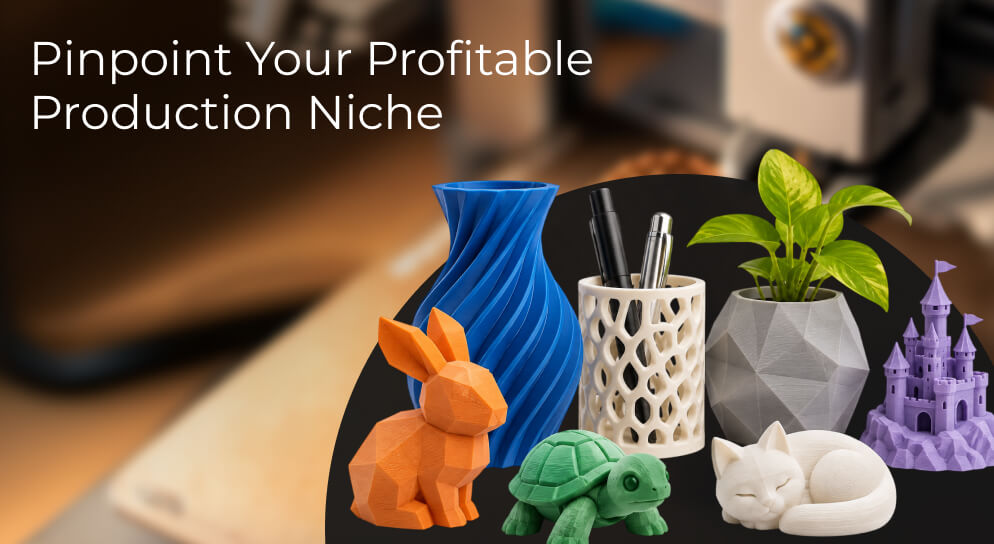
Knowing your niche is extremely important. If you try to offer everything to everyone you will soon be caught in a price war with bulk manufacture overseas.
Custom Prototyping
Engineering firms and local architecture studios will happily pay hundreds for a single high-quality prototype, as they will save thousands on tooling errors from mass manufacturing.
Whereas trying to sell miniature figurines to individuals will result in low margins and constant customer interaction over small imperfections.
Focus on B2B clients that want fast turnaround, functional materials, and complete confidentiality.
Also, you need to look locally for industries with supply chain issues. Classic car restorationists will often need obsolete dashboard knobs.
Medical Clinics often want bespoke ergonomic equipment.
Moreover, you need to visit local repair shops and ask what plastic parts they often wait weeks to get from major retailers.
Step 2: Choose the Correct Machinery and Hardware
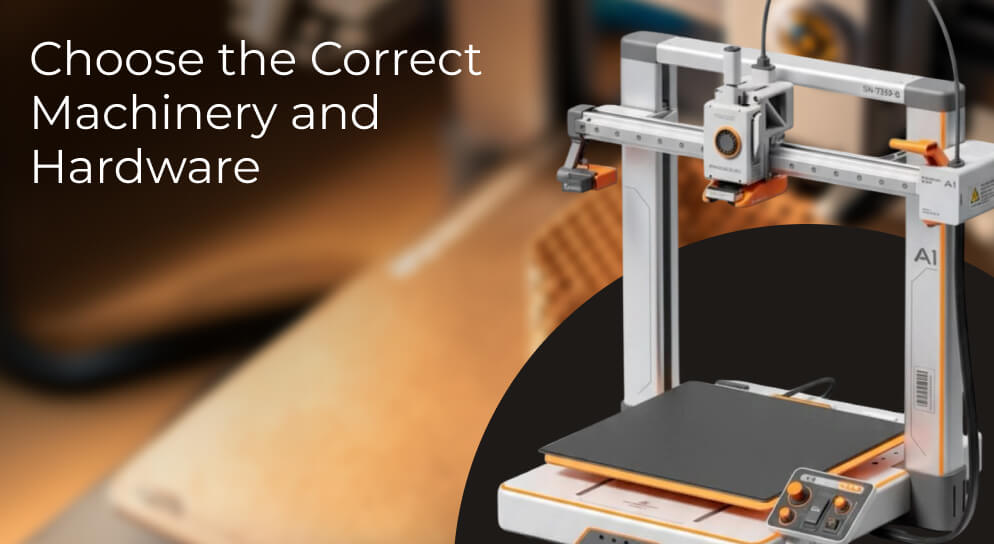
Choosing the right equipment will dictate how you run your business day to day.
Don’t opt for the cheapest printer available. Instead, choose a printer that works with your materials.
Fused Deposition Modeling (FDM)
FDM machines melt plastic filaments from a spool. FDM printers are the go-to for functional parts, structural tools, and mechanical housings.
If you’re using strong materials such as PETG, ABS, or polycarbonate, you can make real parts.
Often, starting with two reliable mid-range FDM printers will be much more practical than a single large temperamental printer.
Stereolithography (SLA)
These printers use UV lasers to solidify liquid resin into plastic. If you want to target the jewelry market or dental labs, then SLA printers are a must.
They produce super fine layers.
However, you will need to be prepared for the resin mess. You will need to have separate wash stations, isopropyl alcohol baths, and UV ovens.
Step 3: Sourcing Reliable Materials and Filaments
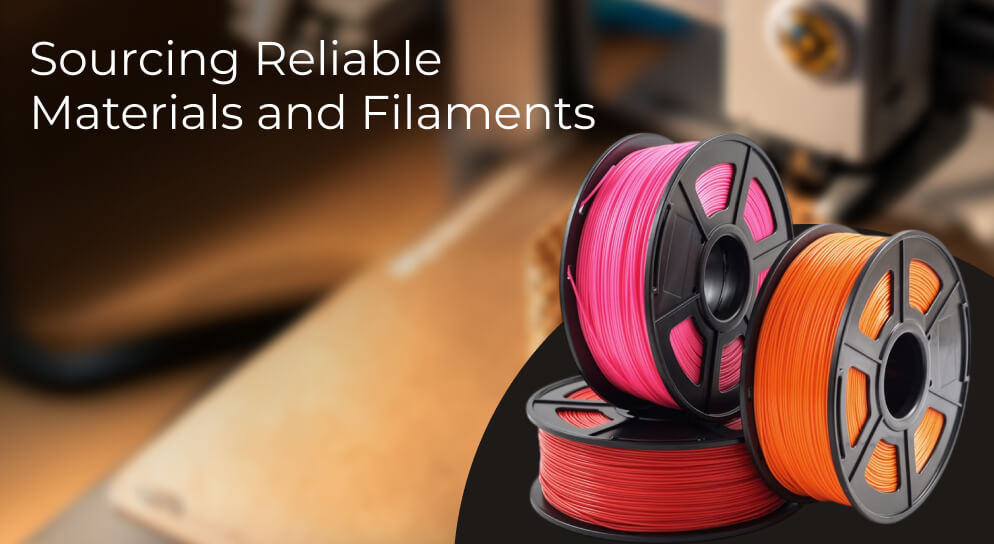
If you are wondering how to start a 3D printing business, you also have to think about the materials ans filaments.
Having stable plastics will determine the quality of your final product. Cheaper, unbranded filaments with inconsistent diameters can cause nozzle blockages.
- PLA (Polylactic Acid): Great for quick, simple concept models. However, it warps when exposed to direct summer heat.
- PETG: This is where it gets good! Great for business. Offers great chemical resistance and flexibility.
- ABS / ASA: Great for outdoor automotive parts. However, you will need to print it in an enclosed chamber to prevent warping at the corners.
Get in contact directly with manufacturers. Never buy individual filaments online.
Even a 0.05mm difference in filament size can cause problems with multi-day print jobs.
Step 4: Master Your Software Workflow
You won’t be able to run a modern workshop if you just know how to download files from online.
You need to design, edit, and optimize your own models.
CAD Parametric Design
If you want to work with engineers, you’ll need to get to grips with parametric software such as Autodesk Fusion 360 or SolidWorks.
This allows you to create clean, precise models that can be altered easily.
Slicer Settings
Your slicer software converts your 3D design into G-code.
As an owner, you’ll need to optimize your settings to save time and materials. You’ll need to understand how to balance infill and wall loops.
Often, 3 perimeters and 15% infill can be stronger and faster to print than thin walls and 50% solid infill.
Step 5: Establish An Efficient, Safe Workspace
A clean, efficient workspace with proper ventilation, power, and organization is essential. Many home start-ups fail due to local issues.
· Ventilation
Printing with plastics such as ABS and curing resins releases VOCs and ultrafine particles.
Never run multiple printers in a bedroom or unventilated basement.
Also, always use dedicated air filters with charcoal or direct exhaust. Keeping your workspace clean is a basic health requirement.
· Power
A power cut can ruin your 15-hour print in seconds! To run your business efficiently, always have Uninterruptible Power Supplies (UPS).
This will keep your main printers running smoothly whilst having a small power cut.
This will help maintain your delivery times and prevent your expensive hot-end nozzles from getting too hot.
Step 6: Set Real-World Pricing Models
Many new business owners will simply double the cost of the raw plastic. This will quickly lead to bankruptcy. Make sure you account for all hidden costs.
Total Invoice Price = Material Cost + Machine-Hour Depreciation + Post-Processing Labor + Fail-Rate Tax (15%)
To work out how much your machine will depreciate per hour, divide your total printer cost by how many hours you expect to use it.
Then add the labor to remove supports, sand, and package. Always add a 15% failure tax.
Step 7: Clear The Legal and Intellectual Property Hurdles
Before opening your online shop, make sure you’re covered.
· Trademarks & Copyright
Don’t print and sell any copyrighted fan art, trademarked movie props or patented mechanical parts. Content creators will often send DMCA takedown notices. Focus on creating your own designs or using open-source files that specifically allow commercial manufacture.
· Liability
If you print a mechanical bracket for a customer’s drone or engine bay and it breaks, causing damage, you will be liable.
So you need to speak to an insurance broker about general product liability for additive manufacturing.
Step 8: Launch Your Storefront and Marketing Strategy
Once your printing area is set up, you’ll need a steady stream of orders.
· Create A Niche Portfolio
Create a fast and clean website showcasing your previous engineering solutions, surface finishes, and materials.
Don’t post generic colorful parts. Showcase clean functional prototypes, assembly line tools, or detailed architecture.
Also, use high-contrast images so exact measurements are clear.
· Local B2B Networking
Don’t wait for people to find you via search engines. Pack up your best prints in a protective case and visit local design groups, machine shops, and engineering offices.
You can also show them how quickly you can turn their blueprints into physical prototypes in their hometown.
Overall, to understand how to start a 3D printing business, you need to create a predictable and repeatable process to deliver functional parts.
Focus on high-margin industrial parts. Price your work to cover your actual labor costs. Treat your workshop like a precise studio.