


“They do not know how to sing.”
“It is just to hide the fact that they are crappy singers!”
“How dare you call yourself a music aficionado when you like singers who use auto-tune!”
I am sure that you must have heard people say things like these either to you or someone else. The world is divided, and no one wants to toe the line where the word “Autotune” comes up!
You are not alone in this.
I have experienced this many times. For instance, one time, I sent my friends a song that I enjoyed in a group chat. I was patiently waiting to read what they thought of the song. However, my sending the link to the song only sparked a debate over whether the song was autotuned or not.
Nina, one of them, said (literally out of nowhere) “This is why old songs are so much better. They did not have autotune back then!”
Which made me think: What would have happened if that was the case? Would his hit songs still be loved and listened to as they are right now?
Autotune: Plastic Surgery for Songs?
Autotune is not something that singers or their labels have used recently. It has been present for decades.
For instance, Cher made it big and cool when she used auto-tune in her chart-topping hit song “Believe” in 1998. Our favorite JLo used auto-tune in her hit song “If You Had My Love” in 1999 to take the song to another level!
You see, there are many more examples that I can take to tell you that auto-tune has been around for some time now.
Unlike what most people think, auto-tune is not just for beautifying songs where the singers can’t sing. This isn’t a technique used to compensate for singers’ lack of talent. Rather, it is the use of software.
Yes, that is right!
If you Google the term autotune or Auto-Tune, you will find out that it is a software, an audio processor to be specific, that the American software company Antares created in the year 1997. The sole purpose of this software was to correct and alter the pitch when it came to instrumental or vocal recordings.
According to the Dictionary results on Google’s search page, the definition of the term is as follows:
“a device or facility for tuning something automatically, especially a piece of computer software that enables the correction of an out-of-tune vocal performance.”
“Real” music lovers often try to make a point that auto-tune is something that makes a piece of song “too perfect” or “devoid of human touch.” Which, in some cases, is true.
However, the intention is not to make more room for tone-deaf and not-so-musically gifted people in the industry. But to correct the pitch.
People’s Thought on AutoTune: Interactive Region to be developed by Dev. Team
Reference: https://www.cosmopolitan.com/interactive/a45953649/celebrities-sex-after-60/
“Auto-tune, I think, can be used to enhance the way music sounds, but using it too much can have a negative effect.”
Harsha
Loves listening to kpop
“Auto-tune is not bad. Oh, I said it. No need to Squint your eyes. Before you put your bias-wall up, know that auto-tune does not make non-singers into singers. But, it does a lot to help make a great music.”.
Shahnawaz
sufi is his muse
“I feel autotune can be beneficial when singers are under the weather and are mandated to perform or record a new piece.”
Nilanjana
pop and soulful songs are her go-to
“All pop stars use auto-tune to correct their vocal incapabilities and sound mechanically perfect, taking out the “human touch” from their supposed ‘art’ they make for the sake of gaining more money.”
Debamalya
heavy metal is what he lives for
The Time Before Autotune: How Were Songs Created Back Then?
You must have heard people talk (read: complain) about how songs from bygone times or generations were much better.
“Musicians from this generation do not know how to sing!”
“Are these even lyrics?”
“You should listen to the songs from the 60s… They were something!”
I admit, during old times, the way a song was written, sung, and produced, it was very different. Things were done manually.
However, just like everything else in this world and the way we live, music and the way it is produced has also evolved.
You see, before autotune was invented, people used to blend three things together to make good music: talent, skill, and creative artistry. And yes, the journey from the inception of the idea of the song to the final product that we now listen to had several steps.
Let me break down each and every one of them for you:
Songwriting and Composition
Writing the melody and lyrics was the first stage in writing a song.
Composers would construct the melody that would accompany the lyrics, while songwriters would draw inspiration from their own experiences, tales, or feelings to craft the lyrics.
Pianos, guitars, and whatever other instrument the writer thought might best capture the mood and tone of the song were frequently used in this process.
Arrangement
An arranger would begin work on the orchestration of a song once the fundamental structure had been determined.
They would then choose which instruments would play certain parts and how they would all work together.
Whether the song would be performed by a soloist, a small group, or an orchestra in its entirety was determined at this critical point.
Rehearsal
After that, the singers and musicians would practice the song’s lyrics until they could play them perfectly.
This was a labor-intensive procedure because each musician had to memorize their part and comprehend how it related to the other parts of the song.
Recording
In a studio, engineers recorded the music using microphones and other devices to capture the sound of the instruments and singers.
There were only so many tracks on the analog tape used for this. As a result, musicians were forced to play their pieces live, frequently in a single take.
They had to start over if they made mistakes, so everyone had to be extremely skilled.
Mixing
To improve the sound quality after recording, the mixing engineer would equalize the levels of the various tracks, tweak equalization, and apply effects like reverb or echo.
This was a challenging procedure because the mix needed to highlight the song’s strongest points without overpowering any of its individual parts.
Mastering
The mixed song was refined to sound excellent on a variety of playback systems in the last step, mastering.
The song’s mastering engineer would make sure that its brightness and punch levels were appropriate and that its volume was in line with other songs.
Pitch Correction
Pitch adjustment required a lot of human labor before Auto-Tune. If a singer sang off-tune, there were not many choices.
They may try singing the line again, or the engineer could utilize methods like changing the speed of the tape to slightly alter the pitch.
Some vocalists would sing the same passage twice over double tracks in order to fill out the sound and cover up little pitch issues.
Cher’s “Believe” Made Auto-Tune Popular (and Controversial)

Prompt: Singer Cher, wearing red lipstick, on stage, water color, poster
I have already mentioned how Cher was the one who made Auto-Tine become popular among the masses. But how did it exactly happen?
“Believe” had become one of the best selling songs of the singer. This up-tempo song that popularized the idea of bouncing back to life after a very rough break-up was something you could hear every time you turned on the radio in the late 1990s.
However, apart from its Eurodance track, what made the song stand out was the prominent and noticeable electronic feature that was done on the vocals. The effect was exactly thirty-five seconds into the song when the singer exclaims: “I can’t break through.”
The electronic glitch on the last three words was almost bizarre, to say the least, at least at a time like that. But that was the hook of the song.
This was Autotune.
According to How Stuff Works, when it came to the recording sessions, the producer “had put the software into overdrive.”
Rather than just slightly altering Cher’s vocal tone, they made such drastic level adjustments that it became a distinct element of the song.
The result was strange and mechanical, yet it worked wonderfully against a soundtrack of synths and exuberant drumming.
Vibrato is a technique used by opera singers to deliver notes with a constantly fluctuating pitch. However, from Cher’s and her producers’ perspective, Auto-Tune was just a digital version of the method.
Even the producers of the song tried to ensure that their magic trick stayed a well-kept secret; they came up with the cover story and stated that it was done with the help of a vocoder pedal, an analog-era effect generally used in funk and disco.
However, the truth seeped out eventually!
Getting Technical: How is Autotune Done?
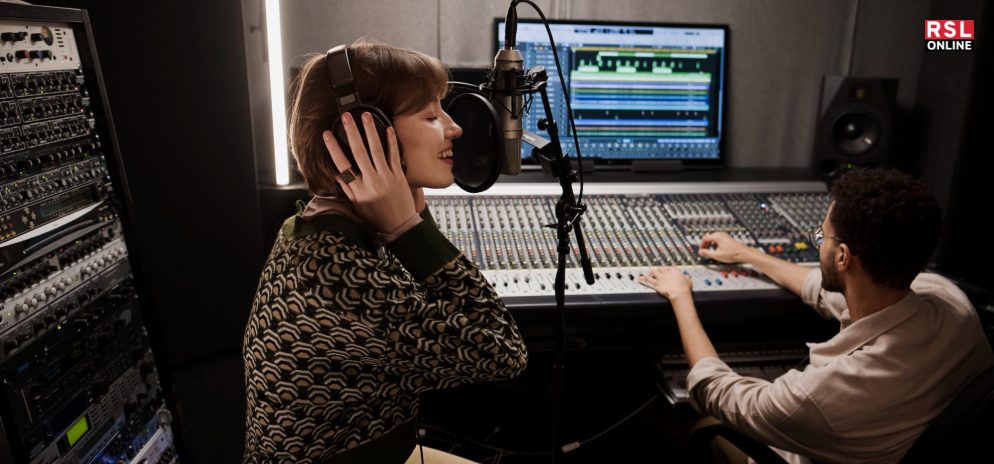
Times have changed, and just like our way of doing everything has evolved, so have songs and the way they are created. And this is something that has been bugging people (or, how shall I put it, the so-called music aficionados?).
Some artists prefer to have some effects and correct the pitch and other parts of the music. And this is something that has been done through autotune. And it is not a crime.
Just imagine that you are singing and song and couldn’t hit a few notes. Or, let’s say that some of the notes were off key. In order to make them correct, people would have had to go over the entire process of re-recording the songs.
However, now, you can simply use auto-tune to make it right.
So, how is it done? What are the steps that one takes before auto-tuning a song? Let me break it down for you:
Prior to using Auto-Tune, you must listen to the music. The technology detects the vocalist’s voice and evaluates the pitch or how high or low the note is. Every note we sing has a distinct frequency, which Auto-Tune excels at picking up on.
After Auto-Tune determines the note pitch, it compares the note pitch to the right pitch—the pitch that the vocalist meant to hit.
It automatically modifies the pitch of the sung note to match the intended note if it detects any discrepancies. Pitch adjustment is the term for this procedure.
Setting the Tone
The ‘correct’ notes must be identified for Auto-Tune to function properly. This is the point of magic.
Artists designate a reference point that Auto-Tune will use as a direction, such as a musical scale or certain notes.
They then determine the rate at which Auto-Tune should adjust any notes that are off-key. They will set a slow correction pace if they want the adjustment to be subtle and organic.
But they’ll make the correction practically immediately if they’re striving for that trendy robotic tone.
The Science Behind the Magic
To perform, Auto-Tune employs a sophisticated algorithm or a collection of mathematical commands.
It examines the voice’s waveform, which is a graphic depiction of sound, and contrasts it with a database of accurate pitches. It adjusts the note to the proper pitch when it detects one that isn’t quite right.
The Creative Side of Auto-Tuning
Even though Auto-Tune is frequently used to correct minor errors, it is now a creative tool as well. Some musicians employ it to give their songs a unique tone or impression.
For example, Auto-Tune’s fast-paced pitch correction has led to the warbling, robotic voice that has grown popular in certain genres.
The Politics of Music: Why are Artists Using Autotune Slammed?
In all honesty, this is something that I do not understand. Why do artists have to be slammed for using autotune?
And it is not just normal people who are expressing their disgust over people using autotune.
There are several musicians who have been very vocal about their hate towards the use of computer software for correcting music, which is considered to be an art.
For instance, let us take the example of Cher’s “Believe.” We all know how incredibly talented Cher is. She is the only artist who has been able to get resurrected time and again. She is a legend.
However, Steve Albini, who is a legendary music journalist, record producer, and audio engineer, pretty openly spoke about his hate towards the song just because it used autotune as he is “kind of sensitive to that stuff happening in recordings.”
In his interview with the AV Club, Albini stated:
“Believe” is this horrible dance-pop song that Cher did in one of her many vampire-rising-from-its-own-ashes moments that she’s had so frequently in her career. It had one of these synthetic moments that I could tell instantly, that was going to be the go-to gimmick for everyone who was stuck for an idea. And that was the synthesized, pitch-modulated vocals that she used in the song “Believe.” As soon as I was aware of that, I realized, “Oh yeah, you know that thing with Auto-Tune that people thought they were getting away with for the last few years? Here’s their excuse to use it baldly and brazenly and not care if anyone notices.” All those people who had been sneaking the odd note into Auto-Tune to try to hide the fact that they were bad singers, now they could embrace the fact that they were bad singers. That seemed inevitable, but when it finally happened, it seemed really depressing to me.”
Cher’s “Believe” Had Sparked Controversy
Albini was not the only one who disliked the song. Even the president of her label, Mr. Dickins, wanted her to tone down the auto-tuning.
In her interview with The New York Times in 1999, Cher mentioned the discussion that she had with Dickins:
“He said, ‘Everyone loves that song but wants to change that part of it,’ ” Cher said. ”I said, ‘You can change that part of it, over my dead body!’ And that was the end of the discussion. I said to Mark before I left, ‘Don’t let anyone touch this track, or I’m going to rip your throat out.’”
Auto-Tune Faces Backlash from “Purists”
But when every bad vocal is saved, it appears that technology has come under attack from new quarters in addition to audiophiles.
Rapper Jay-Z, for instance, called a song on The Blueprint 3 album from the previous year “D.O.A. (Death of Auto-Tune)” and other musicians who have used the program, such as Christina Aguilera, have openly criticized it.
There have been discussions about whether Auto-Tune has made pop radio more generic or less authentic and whether listeners now want vocalists to belt out songs without flaws in their voice or, as some have said individuality.
Still, music writers have occasionally praised Auto-Tune for offering a theme-appropriate sound aspect. One notable example is the eerie, lifeless tone of Kanye West’s voice on his depressing album “808s & Heartbreak,” released in late 2008.
The occasional overt usage of Auto-Tune, regardless of its artistic merits, has left its stamp on popular culture. And this is probably the reason why you will find people dissing artists who use autotune!
The Rolling Stone Controversy with Auto-Tune
Yes, you heard it right! In case you did not know, apparently, the rock legend band The Rolling Stone was under attack for the use of auto-tune in their song Angry from the album Hackney Diamonds (2023).
The band announced the release of Angry during a press conference with comedian Jimmy Fallon. Since then, the song has spurred discussion regarding the extent to which Jagger’s voice has been computer-generated.
Users quickly debated the matter in an online forum run by sound engineer Steve Hoffman (who has worked on records by Deep Purple, Alice Cooper, and the Beach Boys).
Some of the users said that they do not have any massive problems with autotune when one or two notes are corrected using it.
However, they also said: “But the whole ‘stick it on the whole track at maximum settings’ just sucks life out of the performance. Jagger sounds like an AI generated impression of himself.”
Now you tell me something: should that make them any less of a legend than they already are?
“My Favs Don’t Do Auto-Tune”: Umm… Really?
According to Marco Alpert, the marketing VP for Antares Audio Technologies, you might be shocked to know how much auto-tune everyone in the industry uses. “Quite frankly, it happens on almost all vocal performances you hear on the radio.”
“Buy U a Drank,” T-Pain’s first significant Auto-Tune hit, shot to the top of the charts. And this was because of auto-tune.
Kanye West, for instance, met with T-Pain for his 2008 album “808s and Heartbreak,” solely because he wanted to use the robotic magic!
By the time the two were done, every track had Auto-Tune.
In the meantime, the distinctive warble of Auto-Tune was finding unexpected homes. Singers with tinny, strained vocals were releasing songs without the Cher Effect, such as Maroon 5, Avril Lavigne, and the Dixie Chicks.
Those songs would have been laughed at for their shoddy production ten years ago. However, audiences were now oblivious to electronic glitches because they were so accustomed to them.
The reason Rihanna is the most popular singer of our day is partly due to the way the nasal tinge of Auto-Tune blends beautifully with the Barbados grain of her voice, creating a sound that is similar to fire and ice.
Many of her greatest singles feature voice effects, such as the catchy twinkle-chime chorus in “Diamonds” and the “eh-eh-eh-eh-eh” pitch descents in “Umbrella.”
Next up is Katy Perry, whose voice lacks textural width to the point where Auto-Tune transforms it into a stiletto of stridency that sounds as though it’s sticking a spear deep into the listener’s ear canal on songs like “Firework” and “Part of Me.”
I am a huge BTS fan (read: ARMY). And, to be honest, there are tons of times that I have heard people talking bad about their music, saying that they cannot sing because they use autotune.
And you know what I do in those cases? I send them the videos that are all over the internet where they are performing live! And BAAM! They come up with some other excuse for their unwarranted hate for the group.
So, you see the point, people who have to hate a specific musician will always find reason for hating them They do not really need to bring in the debate of whether there was autotune in that song or not. They just don’t like them that much.
And THAT IS OKAY.
As the saying goes: Each to one’s own!
What Would Have Happened if Elvis Presley Used Autotune?
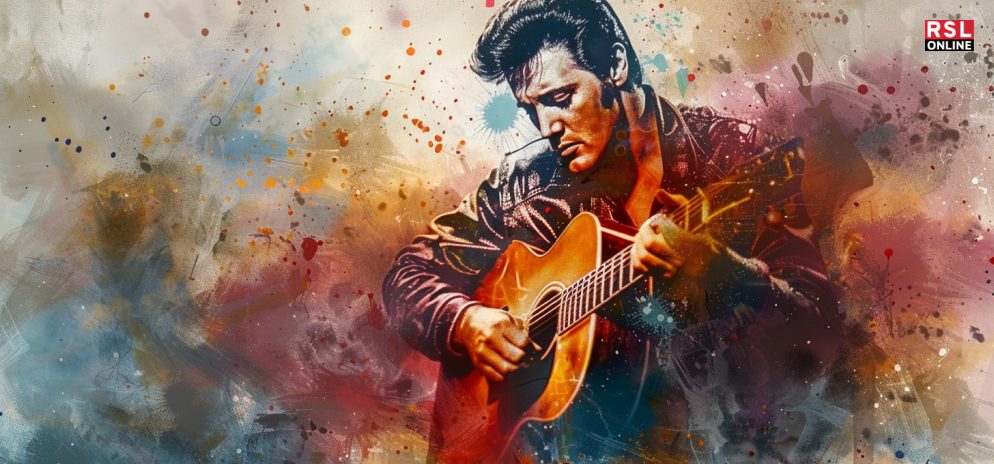
Don’t come at me when I say that I tried auto-tuning one of the most famous and evergreen songs in the history of music. Yes, I did that to Elvis Presley’s “Can’t Help Falling in Love With You.”
For most of you. It might come off as some kind of a sacrilege.
However, hear my explanation out for one.
I used SoundTrap for this experiment. For the sake of it, play the two files back to back:
We all know the melody and lyrics of the song. It is somewhat ingrained in the bloodstream of all music lovers.
But, coming to the fact that people say singers using autotune cannot sing, did it make any difference when you heard the song when it was passed through a software?
You might have a few observations for the file where I have autotuned the song:
- The voice is much clearer when compared to the original
- The reverb and the stereo mix is something that is much more prominent
- The tempo remains the same, just like the original
- The bass is much more prominent.
BUT, apart from this, do you feel like the auto-tuned version of the song takes anything away from the beauty of it.
I mean yes, you might have felt like the original is much better than the auto-tuned one. And I have nothing against that view. However, the musical mastery of Presley is still present in the modified file.
What is the Logic Behind This Hate?
What I don’t understand sometimes is the hate. There is still a perception that musicians who use Auto-Tune lack skill.
In 2015, Ryan Basil stated in an article on VICE that people had submitted petitions for the removal of Kanye West:
“When Kanye West was announced as a headliner at Glastonbury earlier this week, a change.org petition appeared asking the Eavis family to cancel the rapper’s slot and “get a rock band” instead. Supporters of the petition say “watching paint dry would be more entertaining than his auto-tuned bullshit” and by signing, believe they’ve taken “a stand for real music.”
But what precisely is this “real music” that people are so crazy about?
Something that isn’t “real” since it was made by a machine is called auto-tune. THAT is a general perception.
In that case, accordingly, real music from musicians like Woody Guthrie, Bo Diddley, and Muddy Waters—not bands from today—can be described as having been created before the invention of computers.
Because everyone uses a computer these days to improve their music, from Radiohead to Metallica, using samples, click tracks, and space-age filters, among other techniques.
Does this make these people less talented artists?
Not based on historical accounts. However, for some reason, bands like Radiohead are considered to be doing “real music,” whereas Auto-Tune musicians like T-Pain aren’t, even if both are composing, producing, and recording their own music. The latter is denigrated.
This is not how it should be.
In several respects, Auto-Tune is a far better representation of modern pop culture than the millions of pop singers who, despite their flawless vocals, prefer to channel vintage soul music and parody other genres.
Similar to a guitar pedal for your voice, Auto-Tune is high-tech, real but impersonal, and uses digital filters to convey a wide range of emotions.
However, not just everyone can use it. I can assure you that you won’t sound like a radio-friendly single, but rather like an oxygen-starved robot unless you have a songwriting genius.
Autotune is Here to Stay, But…
you must try to separate the art from the artists. You must try to understand that just because a song has been autotuned, the singer does not lose their space in the music industry.
From the beginning, it seemed like a ruse, something that was perpetually on the verge of losing popularity. However, Auto-Tune turned out to be the trend that would not go away. These days, its usage is more widespread than ever.
Auto-Tune’s promise as a creative tool proved to be greater and wilder than anyone could have imagined back when “Believe” topped the charts in 23 countries, despite all the erroneous predictions of its impending extinction.
Autotune is not a way to judge the caliber and the worth of a singer or songwriter. Rather, it is a way to make work better! What do you think about it? Let me know in the comment box below!
Read Also: