









Search “iofbodies.com applications” and half the results describe a software platform you can build on.
The publication iofbodies.com covers the Internet of Bodies (IoB), focusing on connected devices that sit on, in, or inside the human body.
Its applications pages map actual uses of the technology, ranging from glucose monitoring to workplace wearables.
Below, you’ll see what each area does, where the claims outrun the evidence, and a five-question check for any IoB product.
Key Takeaways (TL;DR)
Platform Overview: IofBodies.com is an educational reference about the convergence of connectivity and the human body.
Taxonomy Highlights: The website offers a reliable three-level technical categorization of the Body-External, Body-Internal, and Body-Embedded device domains.
Core Competency: The site strongly emphasizes the latest clinical telemetry trends, swallowable sensors, smart pills, and office safety technologies.
However, the website’s primary area for improvement is a more detailed examination of the encryption mechanisms required to ensure consumer data safety and privacy.
Review Scope: Assessing the website’s relevance as a discovery platform for the Internet of Bodies (IoB) involves:
- Closely examining the resource’s technical content,
- Evaluating its three-tier technical taxonomy,
- Analyzing the covered modern enterprise and clinical applications and their data security risks.
The Site’s Structural Taxonomy: Mapping the 3 Tiers of IoB

A significant advantage I noticed while visiting the iofbodies.com applications area was the way the website categorizes bioelectronic hardware.
Instead of lumping together cheap consumer-grade wristbands and complicated neuroimplants, the website leaves nothing unsorted and contains the information under three large sections:
1. The infrastructure of the body surface,
2. The body cavities infrastructure,
3. The most intrusive types of body-embedded networks.
1. The First Category
This section covers what can be attached to the body surface. The reviews describe how modern optical and galvanic sensors measure movement.
In consumer electronics, you can find various articles reviewing multi-band photoplethysmographic smartwatches.
Moreover, the website also covers more specialized developments. This includes microfluidic patches that sample sweat on the skin surface without damaging the epidermis.
2. The Second Category
This category includes hardware that reaches inside the body through an incision or by being swallowed.
The website has several articles on continuous glucose monitoring systems and smart pacemakers.
Moreover, these can respond to pressure changes directly in the heart, as well as other devices.
3. The Last Category
This category covers the most intrusive medical devices. The articles describe brain-computer interfaces and subdermal RFID/NFC implants.
These let people open doors and use other technologies beyond the body surface, but they are firmly embedded under the skin.
Evaluating Clinical and Enterprise Coverage
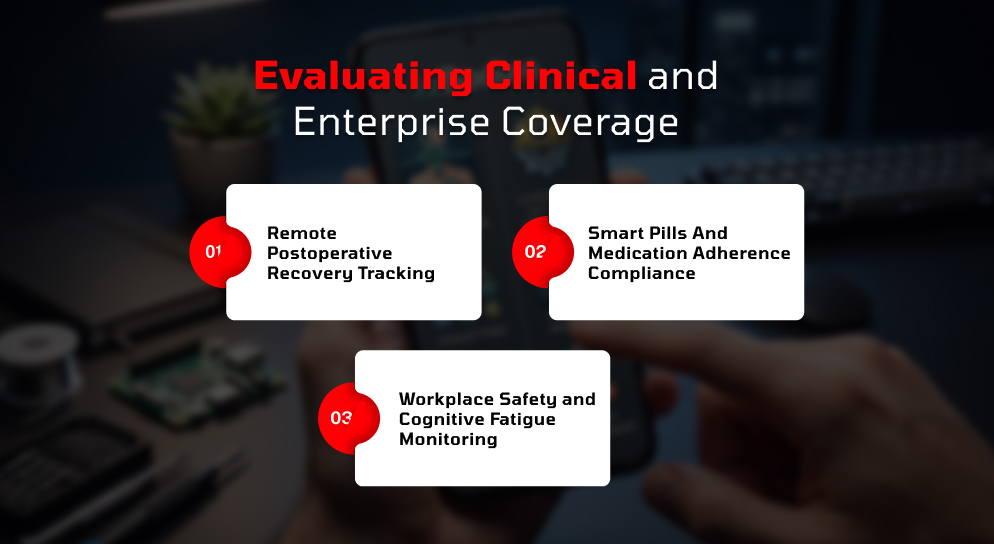
The primary value of IoBodies.com applications library is its practical split between regulated medical fields and occupational workplace deployments.
Remote Postoperative Recovery Tracking
The website correctly highlights how remote telemetry reshapes modern post-surgical care.
By examining connected sensor networks, the platform shows how ambulatory surgery centers use continuous monitoring patches to safely discharge patients early.
Furthermore, the site explains how these tools track localized incision temperatures to predict infections before a systemic fever develops.
This provides clear insight into reduced hospital readmission rates.
Smart Pills And Medication Adherence Compliance
One of the best-documented IoB applications on the website deals with internal digital ingestion trackers.
[Capsule Ingested] ──> [Stomach Acid Activates Micro-Battery] ──> [Patch Logs Dose]
The articles describe the engineering principles behind this technology in detail:
- When a smart pill hits the stomach, acid activates a tiny copper-magnesium battery,
- Which then sends a low-voltage signal through body tissue to a torso patch.
The device records the time the patient takes medication, eliminating unreliable self-reporting during complex clinical trials.
Workplace Safety and Cognitive Fatigue Monitoring
Outside healthcare, the platform also tracks how industrial environments use IoB networks to improve worker safety.
The website reviews a series of practical applications for industrial IoBs: Cognitive
- Wave Tracking: Firstly, reading EEG signals through sensor helmets, allowing logistics managers to predict oncoming driver fatigue.
- Biomechanical Stress Analysis: Secondly, the analysis of data from smart vests worn by fulfillment center employees to ensure safe lifting posture.
- Environmental Threat Detection: Thirdly, cross-referencing of real-time blood oxygen levels with ambient air quality sensors to protect workers in hazardous environments.
Consumer Fitness Guidance vs. Clinical Realities
The portal frequently compares automated consumer tracking with professional clinical equipment. This distinction is critical for users designing a data-driven fitness plan.
| Evaluation Vector | Website’s Consumer App Coverage | Website’s Medical Device Analysis |
|---|---|---|
| Data Integrity | Surface-level tracking averages | Interstitial fluid & tissue analytics |
| Regulatory Standing | Low-oversight wellness tools | Class II/III medical compliance tracking |
| Primary Utility | Tracking broad daily habits | Verifiable diagnostic monitoring |
| Analysis Style | Algorithmic statistical pattern matching | Direct biological measurement loops |
The site rightly warns against relying blindly on an automated AI health coach.
While an algorithm can process historical trend charts well, it lacks genuine diagnostic intuition.
For example, if a fitness tracker mistakes systemic stress from an infection for simple workout fatigue, its automated advice could lead an athlete to overexert.
The platform consistently reminds readers to treat consumer data as a general guide rather than a definitive medical opinion.
Analysis Of Technical Communication Protocols & Security
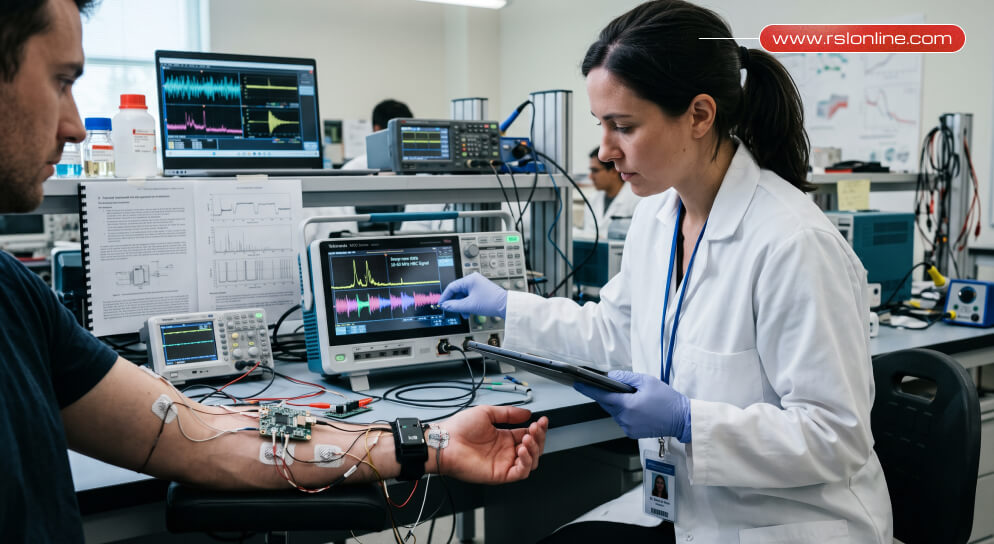
A key factor in IoB devices is the security of the data transmission path from the body to the outside world.
Moreover, technical papers on iofbodies.com describe various approaches to low-power communications in detail.
Human Body Communication (HBC)
IoFbodies.com provides an extensive overview of Human Body Communication protocols.
Unlike conventional Bluetooth or wireless approaches, HBC uses the human body to transmit electrical signals.
Specifically, low-frequency waves carry information through the skin as current surges.
As a result, the body’s energy consumption is reduced by 1,000 times per bit, and the signal is harder to intercept at a distance.
The frequency of oscillations in the described construction is 10 MHz to 50 MHz, which is significantly lower than that used in cell phones.
Security and Data Vulnerability Assessment
While the organization highlights several advantages of its technology, it takes a firm position on addressing potential privacy concerns.
The website lists the following data-related risks to IoB users:
- Data sovereignty liabilities: Insurance adjusters or third-party companies analyzing the data may have access to the same information as the user;
- Command injection: Implants with inadequate encryption algorithms may be hijacked outside the body;
- Hardware obsolescence: If the manufacturer goes bankrupt, the user may be unable to update his device.
Moreover, the website recommends using networks with built-in encryption and VPNs to secure data transfers from the body to the phone.
Medical & YMYL Disclaimer
This site review is intended for general informational, technical, and educational purposes only. The Internet of Bodies ecosystem and its related applications change rapidly, and technical, legal, or medical details may become outdated. This content does not constitute medical, legal, or professional healthcare advice. Always consult a licensed physician or data privacy specialist before utilizing ingestible sensors, implantable devices, or automated biological monitoring systems.
Final Verdict And Next Steps
Our review has led us to the conclusion that iofbodies.com applications serves as an extremely reliable source of information about the IoB industry.
The website:
- Firstly, properly sorts devices by the functions they provide,
- Secondly, explores both practical and clinical uses of bioelectronic devices,
- Thirdly, addresses relevant security concerns associated with the technology.
If you are considering adopting any of the devices mentioned in the article, apply the information you learned as a technical reference.
Your next step should be to review the privacy policies of your current wearables.
This can further help you understand how they store your biometric data safely before considering more invasive technologies.