






Running a mobile food business seems like a piece of cake. You prepare some delicious dishes, find a convenient place, watch over your earnings, and collect the proceeds after you finish work.
However, if you’ve worked behind the service counter, you know that’s not the case.
High ingredient prices, limited prep space, and spiking gasoline rates can eat up all your earnings before you finish your morning shift.
To stay in business and make a profit, you need to identify the most in-demand yet least costly foods and measure their ratios against the time needed for preparation.
Without proper calculations, you will not be able to build a stable business, just spending money on something you really like.
Now, let us take a closer look at the most profitable food truck items.
Key Takeaways (TL;DR)
- High Markup Winners: French fries, loaded nachos, and gourmet grilled cheese offer raw gross margins exceeding 75–80%.
- The Operational Reality: A menu item’s true profitability depends heavily on prep time, storage footprint, and how fast you can turn tickets during a lunch rush.
- The Golden Ratio: Aim for a food cost percentage of 25–30% while keeping individual ticket prep times under 90 seconds.
The Anatomy Of Food Truck Profitability
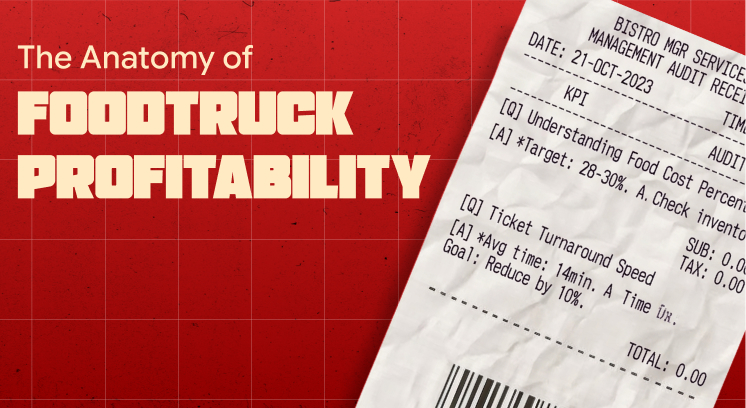
Before getting into individual dishes, we need to define how a food truck actually computes its true earnings.
Moreover, new entrants tend to look at gross markup figures. They feel ecstatic at the thought of a potato costing them ₹10 being sold for ₹100
What they ignore are the hidden drains on their bottom line. True culinary profits are a function of three distinct factors:
[Raw Ingredient Cost (COGS)] + [Prep & Line Labor Time] + [Storage & Waste Footprint] = True Margin
· Understanding Food Cost Percentage
Your Food Cost Percentage is the total ingredient cost divided by the item’s retail price.
In traditional F&B establishments, target a food cost percentage of 30% to 35%.
Furthermore, due to a smaller physical footprint and higher relative fuel costs, mobile units should target a lower range of 25%-28% for primary items
· Ticket Turnaround Speed
A high-margin item becomes worthless if it takes four minutes to throw together on the assembly line.
During a manic downtown lunch hour, your primary constraint is time, not customer demand.
If your line moves too slowly, people walk away. A good rule of thumb is to design your menu item such that the final assembly at the window takes less than 90 seconds.
The heavy lifting needs to be done hours before by your prep staff at the commissary kitchen.
Deep Dive: The Most Profitable Food Truck Items
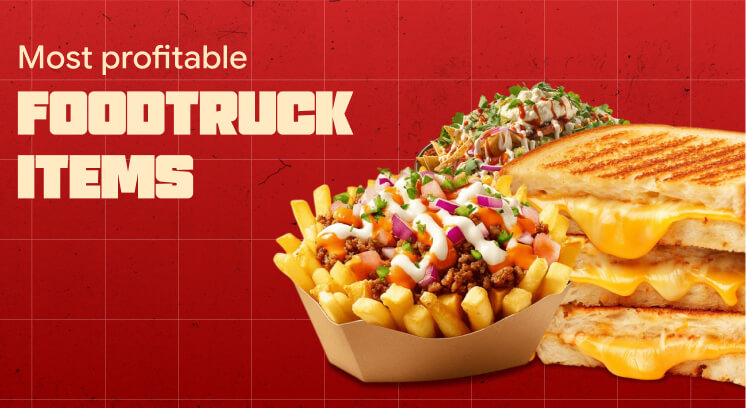
Let’s discuss the menu items that let you build highly profitable street food concepts.
We’ll cover realistic cost breakdowns and the operating advantages and disadvantages of each dish.
1. Gourmet French Fries And Loaded Tots
Potatoes are undisputed champions in the high-margin food category. They are cheap, have an impressive shelf life, and are customer favourites.
- Average Food Cost Percentage: 15% – 22%
- Average Gross Margin: 78% – 85%
The Breakdown
A 2.5 kg bag of frozen products (fries or tater tots) costs a reasonable amount when bought from restaurant suppliers.
Divided into individual portions, the ingredient cost becomes nearly negligible.
So, with a little extra processing, you can turn a humble spud into a highly desirable loaded tot or a crispy wedge with melted cheese, tangy sauce, and smoky bacon.
- Base Fries: 15
- Cheese Toppings, Chives, and Bacon: 25
- Biodegradable Serving Boat: 8
- COGS: 48
- Recommended Selling Price: 220 – 250
The Disadvantage
French fries require a lot of oil and time for deep-frying. You will need to spend a considerable amount of LP gas to keep the fryer heated.
If your truck’s fryer is a standard size, gas consumption will be minimal compared to your LP gas tank.
Moreover, another issue is the limited power of the truck’s ventilation system. It will not be able to cool the interior on a summer day.
2. Loaded Nachos And Street Tacos
Mexican-inspired street food is a staple for many local fast-food restaurants because it lets them save on ingredients through creative preparation methods.
- Average Food Cost Percentage: 20% – 25%
- Average Gross Margin: 75% – 80%
The Breakdown
Tortilla chips and warm tortillas are affordable ingredients when bought in bulk.
The main edge of this menu item is the possibility to prepare large portions of seasoned ground meat in advance using a commercial slow cooker.
Moreover, the cooking process is exceptionally simple and takes only a few minutes per customer.
You can prepare carnitas (seasoned pork shoulder), barbacoa (beef chuck), or simply grilled chicken.
| Ingredient Component | Individual Cost Line | Operational Role |
|---|---|---|
| Bulk Tortilla Chips / Shells | Low | Crispy Texture Base |
| Batch-Cooked Shredded Pork | Medium | Primary Value Add |
| House Salsa & Pickled Onions | Low | Flavor & Visual Appeal |
| Eco-Friendly Paper Bowl | Low | Sturdy Packaging |
The Hidden Catch
Avocados and fresh limes are notoriously volatile commodities. A sudden supply shortage can double your guacamole costs overnight.
To protect your bottom line, never make guacamole free. List it as a premium add-on to safeguard your core margins.
Reimagined Grilled Cheese and Paninis
Comfort food sells exceptionally well because it taps into nostalgia. A basic cheese sandwich won’t turn heads.
However, artisanal sourdough, fontina cheese, and gourmet bacon change the equation.
- Average Food Cost Percentage: 24% – 28%
- Average Gross Margin: 72% – 76%
The Operational Breakdown
Bread and cheese are highly manageable ingredients with predictable shelf lives.
With a high-efficiency commercial panini press or flat-top grill, you can cook multiple sandwiches at once without a complex kitchen setup.
The Hidden Catch
Cheese melts at a fixed physical rate. You cannot easily speed up melting without compromising the bread’s crispiness.
Furthermore, this creates a hard ceiling on your ticket output during sudden spikes in customer traffic.
The Hidden Margins: Upgrades And Add-Ons
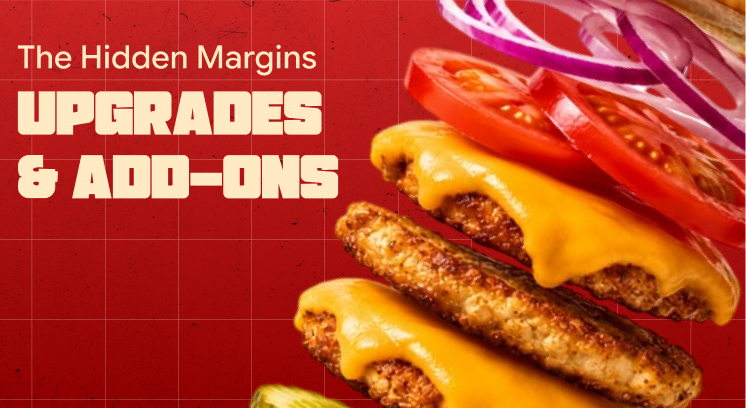
Experienced operators know that while finding the most profitable food truck items can be a challenge, the most profitable items often require no cooking time at all: beverages and high-tier modifications.
[Core Entree (25% Food Cost)] + [Premium Beverage (10% Food Cost)] = Optimized Ticket Profit
The Beverage Multiplier
Make sure you never sell a customer just an entree! Canned sodas, mineral waters, and local craft beverages have unbelievably low cost metrics.
A standard chilled beverage container costs very little in wholesale capital but can sell at an incredible premium.
So, speciality house-made items, like fresh-squeezed lemonade or iced matcha lattes, drive food costs down even lower, sometimes into the single digits.
Custom Component Add-Ons
Adding premium toppings is the easiest way to increase your average ticket size without slowing down your assembly line. Consider these high-margin additions:
- Fried egg topper
- House-pickled jalapeños
- Speciality hot sauces
- Drizzle of local hot honey
Each item costs pennies to source and prepare, but customers will happily pay a premium to customise their meals.
Designing A High-Efficiency Menu
If you think about it, offering 15 different items on your mobile food unit menu may actually keep it from being profitable.
A bloated menu creates excessive cold storage needs, significant food waste, and customer confusion at the window.
The most profitable trucks have focused their offerings in a tight group based upon a “Menu Matrix”:
· The Core Anchors (High Volume, Medium Margin)
Familiar favourites that attract customers to your window (think classic burgers or street tacos).
· The Margin Boosters (High Volume, High Margin)
High-impact items that you can drive customers to through effective menu board design (like gourmet loaded fries).
Focus on three to five core menu items with varying toppings. This can help you to create the illusion of variety while keeping inventory turnover high, food waste low, and your kitchen staff focused on speed and precision.