









Starting a business is an incredibly exciting milestone, but the legal paperwork can quickly feel overwhelming.
If you want to shield your personal savings from business risks, forming an LLC is often the smartest move.
But how do you actually cross the finish line without drowning in confusing state forms or overpaying third-party platforms?
When people ask how do you create an LLC, they often expect a simple, one-size-fits-all checklist.
The reality is that while the core steps are universal, the execution depends heavily on the specific state you call home.
Let’s break down the process, clarify the confusing legal jargon, and look at the real numbers you will need to budget for.
Choosing The Right State For Your Business
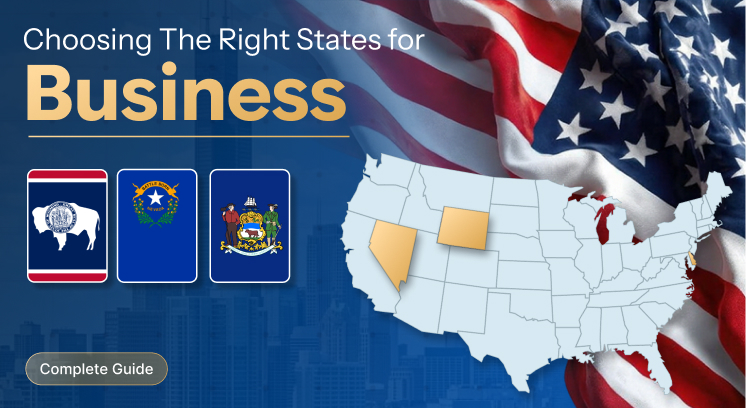
A common misconception when starting out is that you should register your business in Delaware, Nevada, or Wyoming.
These states are known for being business-friendly.
In my opinion, unless you are looking to raise venture capital, most small businesses should register their LLC in the state where they reside.
If you are based in Ohio but set up your LLC in Delaware, you will need to register as a foreign LLC in Ohio to open a bank account or sign a commercial lease.
This means you will pay double the fees.
| Registration Choice | When It Makes Sense | The Hidden Trade-Off |
|---|---|---|
| Your Home State | You operate locally, have an office, or work out of a home studio. | You are subject to local state tax brackets and reporting rules. |
| Delaware / Nevada | You plan to seek institutional funding or take the company public. | You must pay for an out-of-state registered agent and file multi-state reports. |
Naming Your LLC Without Infringing On Existing Brands

Your new business name should reflect your brand. However, it must also meet your state’s strict criteria.
Your company name should include a suffix such as “Limited Liability Company”, “L.L.C.” or “LLC”.
Your company name must also be unique from any other entities currently registered in your state.
You can also check this yourself on your Secretary of State website.
Pro tip – Don’t just search for the exact name. If there is already an entity called “Sunset Café LLC,” then you will likely be denied your application for “Sunset Coffee Shop LLC”. This is because the state will see it as confusing for customers.
Once you have found a name that hasn’t been taken, purchase your .com domain and social media handles.
Appointing A Registered Agent: The Privacy Trap
Every state will require you to register a registered agent for your LLC.
This is someone or an entity who can receive government correspondence, tax notices, and legal citations (lawsuits) on your behalf.
The registered agent must have a physical address (not a PO Box) within the state you have registered your company in. They must also be available between 9 a.m.- 5 p.m.
You can use yourself as a registered agent. However, consider the impact this will have on your privacy.
The registered agent’s details will be public information.
When I created my first LLC many years ago, I used my home address to save a few dollars.
Within 3 weeks, my mailbox was full of junk mail and targeted marketing.
The worst part is that if you are ever sued, a process server will deliver legal papers to your front door in front of your family or neighbors.
To keep your personal information safe, I would recommend you pay for a registered agent. This should cost around $50 to $150 per year.
Filing The Articles Of Organization

This is where your business officially comes to life. You will need to file documents (often called Articles of Organization or Certificate of Formation in some states like Delaware).
These documents should include:
- Your LLC name and physical address.
- The name and address of your registered agent.
- What the purpose of your business is (this will usually say any lawful business).
- Whether your business will be managed by the owners or an appointed manager.
When people ask how do you create an LLC this is often the most concerning part. However, almost all states allow you to complete this online in under 15 minutes.
You will, however, have to pay a filing fee. These can vary throughout the country. Here are some examples:
- California – $70
- New York – $200
- Texas – $300
- Florida – $125
Drafting Your LLC Operating Agreement
An Operating Agreement is a bit like a constitution for your business. It outlines each owner’s ownership percentage, how profits and losses are shared, how major decisions are voted on, and what happens if an owner wants to sell their share.
Only a handful of states (California, New York, and Missouri) require you to have an Operating Agreement. However, we would still recommend you have one.
If you have a single-member LLC, a clean Operating Agreement will help show you have limited liability protection.
This shows the court and tax authorities that you are operating your LLC as a separate entity.
You don’t need to file this document. Just keep it somewhere safe with your main company documents.
Securing An EIN And Opening A Business Bank Account
Once the state approves your paperwork, your final structural task is to secure an Employer Identification Number (EIN) from the Internal Revenue Service.
Think of an EIN as a Social Security Number for your business.
Don’t fall for online scams that charge $50 or $100 to get this number.
You can secure an EIN for free directly on the official IRS website in under ten minutes.
You will need this number to complete basic business setup tasks:
- Opening a dedicated business checking account
- Hiring employees or independent contractors
- Applying for local business licenses or sales tax permits
Once you have your approved Articles of Organization and your EIN, walk straight into a bank and open a separate business checking account.
Never mix personal and business funds. If you pay for groceries using your business debit card, or pay for business inventory from your personal account, you commit an error known as “commingling funds.”
If a creditor or plaintiff sues your business and discovers commingled accounts, they can ask a judge to “pierce the corporate veil.”
Moreover, if the judge agrees, your limited liability protection vanishes, leaving your personal home, cars, and savings completely vulnerable.
Understanding Taxes And Long-Term Compliance
Now that we have covered the basics of how an LLC works, you need to know how they will affect your business going forward.
Pass-Through Taxation
The IRS mainly classifies single-member LLCs as disregarded entities and LLCs as partnerships who has multiple members.
This means you will benefit from pass-through taxation.
Instead of paying corporate tax, your profits or losses pass through. This goes to the personal tax return. This can be reported on your Schedule C.
This means you won’t pay double taxation like C-Corporations. Double taxation is when your profits are taxed once at the company level and again for the individuals.
As you are classed as self-employed, you will need to pay self-employment tax (15.3% for Social Security and Medicare) on your net earnings along with your usual tax.
Fees And Annual Returns
Forming your entity isn’t a one-off payment. Most states will require you to file an annual or biennial return.
If you fail to pay, you will be heavily fined, or your business may be dissolved.
Here are some examples of the annual costs:
- Delaware: $300 franchise tax. This must be paid by March 1st each year.
- California: $20 statement of information fee due every two years, plus a minimum annual franchise tax of $800 to the California Franchise Tax Board.
- Florida: $138.75 annual report fee, due by May 1st. Missing this deadline triggers an immediate, non-negotiable $400 late fee.
- Texas: There is no annual fee. However, you will need to file a No Tax Due Information Report.
Expanding Your Brand: Foreign Qualification
As your business grows, you may decide to expand into other states.
If you open a store, employ staff remotely, or set up a warehouse in another state, you will need to file a foreign qualification.
This involves filing an application with the new state’s corporation department. You also must provide a recent Certificate of Good Standing from home state.
You will need to pay a fee to register. This can range from $70 to over $750, depending on where you expand.
Not completing this is extremely risky. In most states, you will not have the right to sue there if a client doesn’t pay you or breaches a contract.
This is because you aren’t registered as a foreign corporation.