







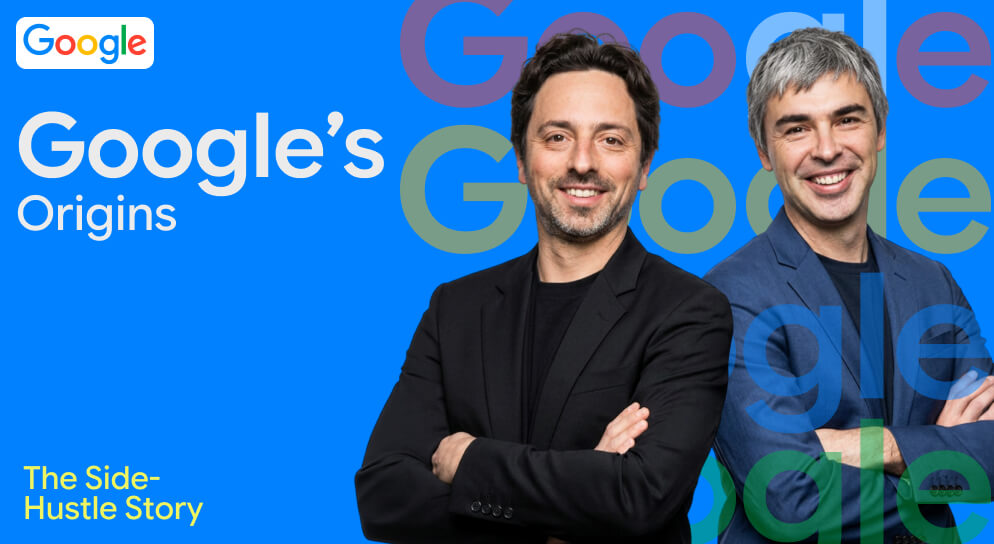
The early search engine began developing in January 1996. The domain name google.com was registered in September 1997, and the company was officially founded in September 1998.
However, one of the biggest mistakes in tech history actually starts the real story of Google’s invention.
In 1999, the busy side hustle deeply stressed the two young student founders, so they offered to sell the entire search engine to the internet giant Excite for $750,000.
They just wanted to get out of their side hustle and stress, and get back to completing their college work. (cnbc.com)
Excite refused to buy the search engine. This huge rejection pushed the two students to take their university project and turn it into a global empire.
When you look at most corporate timelines, you may think Google’s journey was smooth from the beginning.
However, that won’t help you as an independent creator. It misses key points, such as running a basic prototype for over 2 years with no income, receiving a huge investment before they had a bank account, and using a rented garage as a marketing tactic. [Source: /about.google]
Let’s take a look behind the scenes of how Larry Page and Sergey Brin really invented Google. Discover how a heavy passion for coding can overcome academic pressure, legal hurdles, and initial rejections to change the internet forever.
Direct Answer: When Did the Founders Invent and Formally Launch Google?
If you need a quick and highly accurate answer for your research, here are the official dates:
- January 1996: The founders began developing the early search engine code, which they initially called “BackRub”.
- September 15, 1997: The founders officially registered the search engine domain name (google.com).
- September 4, 1998: The founders officially formed Google Inc. as a private company.
The Real Story of 1996: When Was Google Invented as a Research Project?
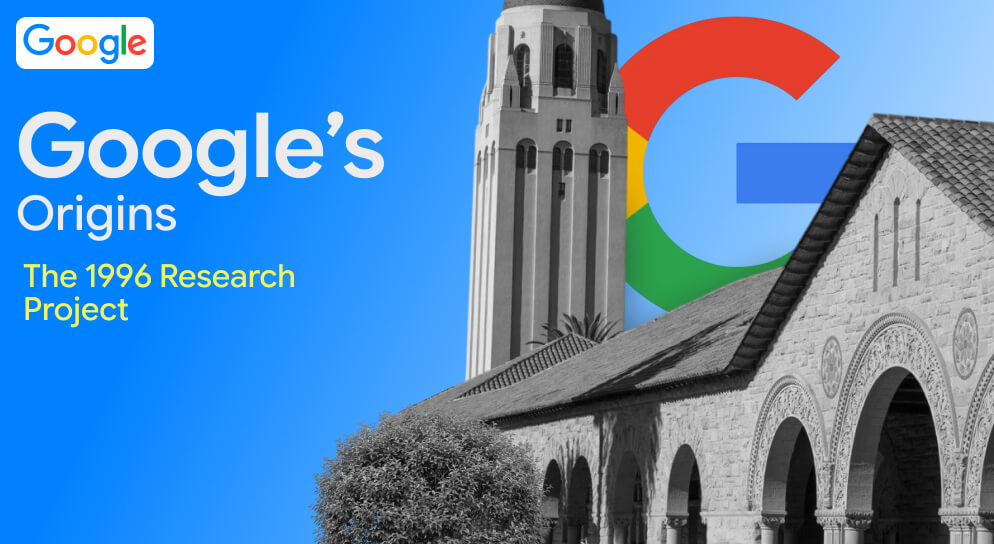
If you read standard blogs explaining when was google invented, they almost always fast-forward straight to the year 1998. The media loves to focus on the corporate launch.
However, the period between 1996 and 1997 is far more important for anyone looking to build an independent web platform.
Larry Page and Sergey Brin did not start Google to launch a corporate empire. As Ph.D. students at Stanford University, they were simply looking for a thesis topic.
Their early side hustle, originally called BackRub, was a purely technical experiment to see how websites linked to one another.
Because they didn’t have massive investor funding yet, they built their first server racks out of cheap plastic LEGO blocks to save cash.
According to historical timelines recorded on the History of Information Project, they kept the project alive by borrowing computing power from Stanford’s university servers, running their tests quietly in the cracks of the academic schedule.
The Side-Hustle Takeaway
You don’t need a massive hardware budget or an enterprise setup to build the first version of your digital product.
Use the basic resources right in front of you, whether it’s cheap shared web hosting, free open-source tools, or recycled parts. Focus on the core code and functionality before worrying about premium hardware.
The Bank Account Crisis: How the First $100,000 Was Received
An interesting fact that most articles miss is the legal issue behind receiving their first investment.
In August 1998, Andy Bechtolsheim (a highly successful tech investor) saw a quick demo of the search engine on the university porch. He was so impressed with the algorithm’s speed that he wrote a $100,000 check.
However, Andy Bechtolsheim wrote the check to “Google Inc.” before the company actually existed.
The founders were just students and had not created any corporate registration, business license, or bank account. (Source: https://gd.eurisko.com.br/)
As documented on Wikipedia’s Andy Bechtolsheim Entry, the check sat in Larry Page’s drawer for weeks because they couldn’t cash it until they rushed to complete the paperwork to form the company.
The Side-Hustle Takeaway
A real side hustle will focus on creating huge value. Do not waste weeks setting up your legal structure, logo, and bank account.
Also, focus on creating your product first.Then, you will face legal issues later once you verify market interest.
The $1,700 Garage Office: Separating PR Strategy From Reality
Almost every tech article on the internet says Google’s creators were broke and lived in a damp garage. This is used as a romantic tale of ultimate bootstrapping.
However, they weren’t broke at all. The founders moved into Susan Wojcicki’s garage in Menlo Park in September 1998.
As Business Insider reporters detailed, they had just raised over $1 million in seed funding from friends, family, and Silicon Valley investors. (Source: businessinsider.com)
Furthermore, they intentionally rented the garage for $1,700 per month to help their friend pay her mortgage.
But mostly because it helped create a huge marketing image. They created a scrappy brand image that tech companies still use today to gain public support.
In fact, Google loved the story so much they purchased the whole house in 2006 so they could keep the garage as a PR icon. (Source: businessinsider.com)
The Side-Hustle Takeaway
Branding is incredibly important for your early-stage business. You do not need to look like a multi-million-dollar company from day one. People will automatically support a scrappy, genuine creator. Use your humble beginnings to create a loyal community.
The Exit Attempt: Why the Founders Tried to Quit Search
People assume that the founders knew they had a trillion-dollar goldmine from the beginning. However, the two students found running their side hustle extremely stressful and tried to give up completely. (Source: cnbc.com)
By early 1999, the search engine was taking up all their time, and they could not complete their actual university work or PhDs. (Source: cnbc.com)
To cut ties with their side business, Page and Brin spoke to George Bell (CEO of Excite).
As CNBC’s Tech History Analysis covered in detail, they offered to sell the whole Google platform to Excite for just $1 million so they could get back to their peaceful student life.
When Excite refused the initial offer, the founders dropped their price to $750,000, but Excite still rejected them.
Moreover, as no one would buy their side hustle, they had no option but to give it their all, leave Stanford, and grow it themselves. (Source: cnbc.com)
The Side-Hustle Takeaway
If market leaders reject you, it’s unlikely to mean your side hustle is a failure.
Many large corporations will not see the potential in the disruptive tools created by small creators.
If industry giants have rejected your ideas, that’s a clear sign to stay independent and build the platform yourself.
The First Hire Hustle: Working For A Company That Didn’t Exist
Most blogs mention only the two famous founders when talking about when Google was invented. They completely miss the human element of their side hustle.
Craig Silverstein was a normal graduate student in 1998. He met Larry Page and Sergey Brin at a school seminar and began helping them create their search engine.
Moreover, the founders decided to leave school and turn their side hustle into a company. They asked Craig to be their first official employee.
As shared in historical features by The New Yorker, the setup was completely informal: Craig would sit on the floor of a busy student dorm room at night and write the basic code that let the engine search millions of web pages without crashing.
He even agreed to leave his PhD completely to see where this would take him.
The Side-Hustle Takeaway
You don’t need a large corporate setup to attract great talent. Great people will join your side hustle early on because they are genuinely excited to solve your problem.
Moreover, you need to create a working product and treat your first team members as equals. Focus on the core coding.
The “Anti-Sticky” Trick: The Strategy That Won The Internet
Most articles say the software was so successful because it delivered great search results.
However, this misses the business tactics that let a student side hustle beat multi-billion-dollar companies.
In the late 90s, all the main internet giants (Yahoo, Excite, AOL) focused on creating a “sticky” site.
They wanted users to stay on their homepage for as long as possible. Moreover, they loaded their homepages with flashy adverts, weather, games, and news. (Source: internethistorypodcast.com)
The team that started Google took the opposite approach. They created a very basic homepage with just a search box.
As Internet History Podcast reported, their aim was to make it so fast that users would find their answer within 10 seconds and leave the site.
By focusing on speed and helpfulness, they built up a huge level of trust with users. While big companies tried to keep users on their sites, the two students focused on solving the problem.
The Side-Hustle Takeaway
You don’t need to copy your competitors’ long list of features to beat them. Look at what is annoying your customers and create a simple solution.
Furthermore, true value comes from making things easy for your audience.
The Verdict: Validate The Code, Then Formalize The Brand
The early stages of Google’s invention show that creators do not build most game-changing web platforms as part of a massive corporate plan.
Moreover, Google got through this crucial stage by spending 2 years developing a highly useful algorithm with basic university resources.
Moreover, they ignored the early corporate setup until they had to, due to funding, and they stayed focused when buyers rejected them.
So, when creating your online side hustle framework, remember that true traction comes from usefulness. Thus, you need to focus on creating a tool that solves problems for your target audience.