







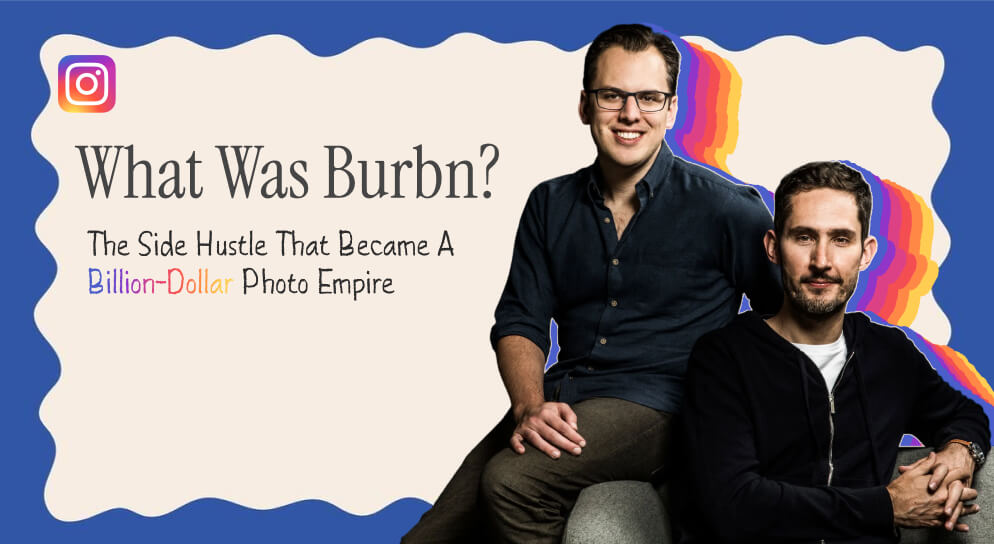
Burbn was a location-based social networking app. Kevin Systrom, along with Mike Krieger, created it in early 2010. (britannica.com)
Forget all the polished stories.
The internet tends to tell the story of two Stanford graduates who suddenly came up with a straightforward photo-sharing app and gained 25,000 users in just one day. (britannica.com)
They later sold the app to Facebook for $1 million within two years.
However, this isn’t helpful if you’re trying to create your own app, start your own tech company, or even build a side hustle.
This story doesn’t account for what actually happened. Their prototype was extremely bloated, and nobody used it. They then made the tough decision to remove almost everything they had created.
Instagram was not created as a sleek, viral photo-sharing giant. It was actually created as an awkward and overly complicated side project. The name Instagram came from Kevin Systrom’s favorite Kentucky whiskey. (britannica.com)
In this blog, we’ll discover the blueprint for how a failing check-in app became a global empire.
We’ll cover how it started and how Kevin Systrom self-learned the code at night without a computer science degree.
Direct Answer: What Was Burbn App?
- Who: Kevin Systrom founded Burbn. Mike Krieger later joined. (britannica.com)
- When: The HTML5 prototype was created in early 2010. The company raised $500,000 of seed funding on March 5th, 2010.
- What: A location-based social networking app with a rewards system using points, photo sharing, and check-ins. (businessinsider.com)
- What Happened: In mid-2010, the team removed all features except photo sharing, renamed the app Instagram, and launched it on October 6th 2010. (britannica.com)
From Cluttered Prototype To $1 Billion: What The Textbooks Don’t Tell You
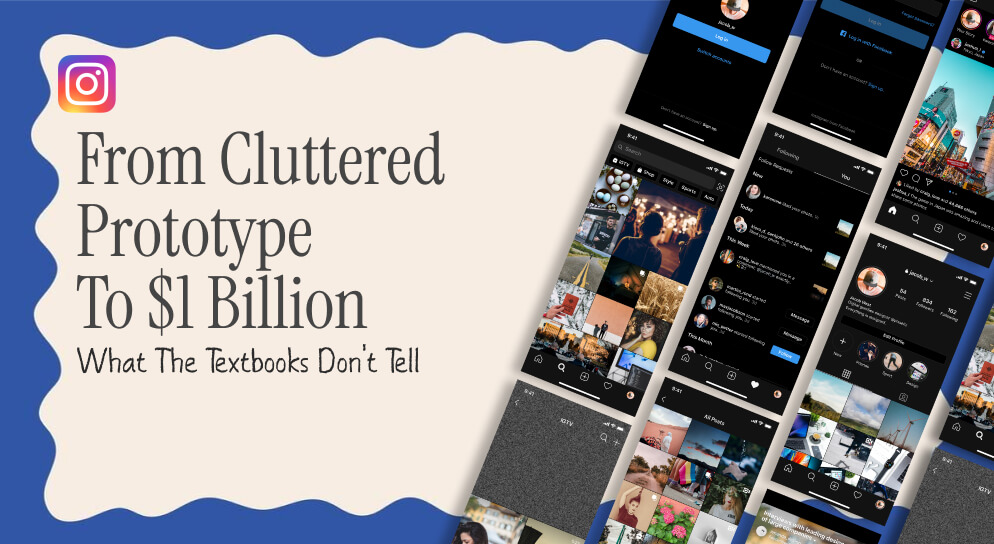
Below is a table explaining the biggest misconceptions about Burbn’s early days, what actually happened, and what lessons you can take from it.
| The Common Myth | The Real Secret History | The Actionable Side-Hustle Lesson |
|---|---|---|
| Elite computer science coders from day one. | The Night-School Coder: Systrom was a marketer who taught himself to code after hours. | Learn just enough coding to build a working minimum viable product. |
| Invented an original photo concept. | The Foursquare Copycat: Burbn was originally a cluttered Foursquare clone with heavy game mechanics. | Start with something familiar and observe real user engagement. |
| Pitched formal slide decks to Sand Hill Road VCs. | The Party Pitch: Systrom raised $500,000 from top investors after demoing his app at a San Francisco party. | Always keep a working demo accessible on your device. |
| Added more features until users finally loved it. | The Brutal Pivot: They deleted 90% of their code, discarding months of work to focus solely on photos. | Don’t cling to failed features; cut the bloat and double down on what works. |
Where Did Kevin Systrom Actually Build Burbn? (The Non-Coder Secret)
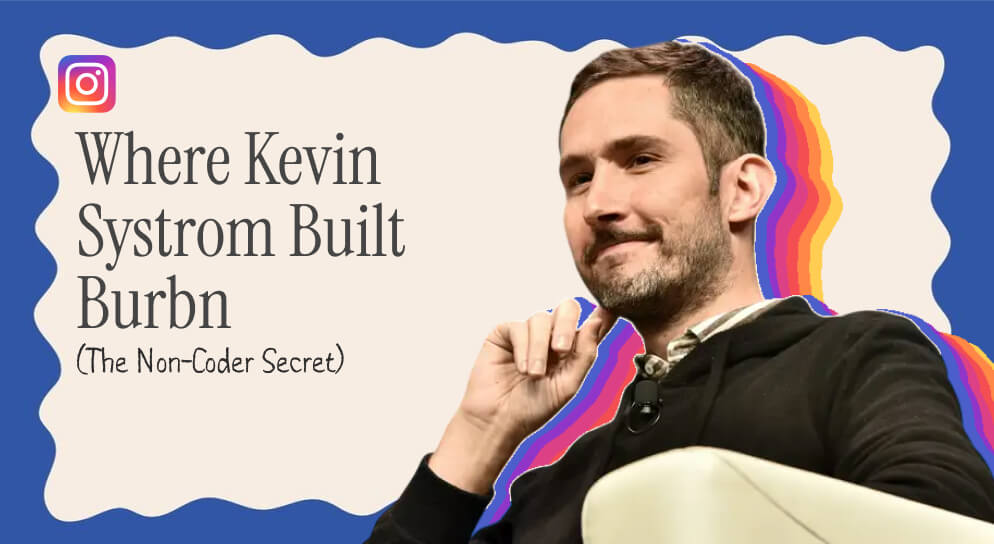
Kevin Systrom did not study computer science at Stanford. He studied management science and engineering and worked in marketing at Google and Nextstop.
While keeping his day job, he taught himself basic HTML5 in his off-hours to build a mobile web app inspired by Check-in trends like Foursquare. He named it Burbn after his favorite Kentucky bourbon. (britannica.com)
The Side-Hustle Takeaway
You don’t need a technical degree or expensive agency to start. Build a simple prototype during your spare time and get a tangible product in your hands.
The Hunch Party Pitch: How A Clunky Prototype Raised $500,000
Rather than pitching with a lengthy business plan, Systrom demonstrated a live, working prototype of Burbn at a 2010 tech party in San Francisco hosted by Hunch. (businessinsider.com)
There, he caught the attention of prominent venture capitalists Steve Anderson (Baseline Ventures) and Marc Andreessen (Andreessen Horowitz).
Following follow-up meetings, he secured $500,000 through seed funding on March 5, 2010, enabling him to work on the project full-time. (businessinsider.com)
| Pitch Stage | What Happened In Real Life | Why It Worked |
|---|---|---|
| 1. The Build | Systrom codes an HTML5 web app at night alongside his day job. | Investors trust execution over mere concepts. |
| 2. The Network | He attends a local San Francisco tech gathering. | Being in the right room opens doors to unexpected opportunities. |
| 3. The Demo | He hands his live phone demo directly to Anderson and Andreessen. | Real, clickable products outperform theoretical pitches. |
| 4. The Follow-Up | He meets them for casual coffee chats over subsequent weeks. | Informal settings foster genuine, low-pressure conversations. |
| 5. The Funding | He raises $500,000 and leaves his corporate job. | Capital buys the runway needed to recruit and refine the product. |
The Side-Hustle Takeaway
A working prototype beats a slide deck every time. Show a real version of your idea rather than just talking about it.
Kevin Systrom vs. Mike Krieger: Why A Solo Founder Needed A Partner
Feeling overwhelmed as a solo coder, Systrom enlisted Mike Krieger, who had attended Stanford and used Burbn. (inc.com)
Together, Systrom oversaw product vision, aesthetics, and storytelling, whereas Krieger built the backend, designed the interface, and scaled the server.
- Kevin Systrom: Vision, branding, filters, marketing, and investor relations.
- Mike Krieger: Backend engineering, app speed, interface design, and scaling.
TheSide-Hustle Takeaway
Know your weaknesses. Working with people who bring in skill sets or operations that match your areas of weakness transforms a disorganized side project into a viable business.
The Data Wake-Up Call: Why Burbn Was Failing Silently
Despite half a million in funding, Burbn plateaued at roughly 100 active users who rarely engaged beyond polite experimentation.
The app suffered from classic feature bloat, confusing users by attempting to be a check-in tool, social planner, and gaming leaderboard all at once.
By analyzing in-app data, the founders realized users were skipping check-ins and plans and using the app only to share and comment on photos. (britannica.com)
| Burbn Feature | What The Founders Expected | What Users Actually Did |
|---|---|---|
| Location Check-Ins | Core daily habit. | Ignored in favor of established competitors like Foursquare. |
| Making Plans | Evening scheduling tool. | Considered clunky; users preferred standard texting. |
| Points & Leaderboards | Gamified engagement driver. | Ignored by users entirely. |
| Photo Sharing | Secondary bonus feature. | The sole reason people actually opened the app. |
The Side-Hustle Takeaway
Stop guessing what people want. Track how users actually interact with your product and ruthlessly trim away features they ignore.
The 8-Week Pivot: Deleting 90% Of Their Work To Create Instagram
Systrom and Kripper decided not to keep adding features, but to throw away about six months of work and start from scratch, focusing only on mobile photo sharing. (britannica.com)
The rebuilding period lasted eight weeks. (britannica.com)
They came up with the idea of one-tap filters in the style of vintage photos to help with smartphone camera limitations and the slow mobile data speeds prevalent in 2010.
They also used the background pre-uploading feature to prepare image files for publishing the moment users hit the share button.
Rebranded as ” Instagram, ” merging “Instant Camera” and “Telegram” into one, the product was publicly displayed on October 6th, 2010.
It attracted 25,000 downloads in one day, one million users within a month, and then sold to Facebook for $1 billion in only 18 months, still operated by a 13-person team. (wikipedia.org)
The Side-Hustle Takeaway
Outstanding products don’t need features that complicate. Get rid of friction and center the effort on that main action of yours that your users value most.
The Check-In Wars: Why Fighting Giants Almost Killed Burbn
One of the biggest mistakes new founders make is stepping into a crowded ring against massive competitors with millions of dollars in the bank.
In early 2010, location check-in apps were the hottest trend in Silicon Valley. Two giant startups, Foursquare and Gowalla, already owned the market. (britannica.com)
When Kevin Systrom along with Mike Krieger first launched Burbn, they were trying to beat Foursquare at its own game. Every time a user opened Burbn, they were asking people to abandon an app their friends were already using.
Even worse, another photo app, Hipstamatic, was already dominating the Apple App Store with cool retro filters. However, Hipstamatic had one fatal flaw: it had no social feed. Users could edit photos, but they couldn’t easily share them or get likes from friends.
Systrom and Krieger spotted the gap between the two markets. Instead of fighting Foursquare for check-ins or copying Hipstamatic’s paid filter store, they merged the best parts of both into one free app.
| Competitor In 2010 | What They Did Well | Their Fatal Flaw | How Instagram Beat Them |
|---|---|---|---|
| Foursquare | Owned location check-ins and city badges. | Cluttered interface with zero focus on photography. | Ditched check-ins completely and made photos the main feed. |
| Gowalla | Beautiful visual design and travel stamps. | Required too much effort to use every single day. | Made posting take less than three quick taps. |
| Hipstamatic | Amazing vintage camera lenses and filters. | Charged users per filter and had no social network. | Made filters 100% free and added instant social sharing. |
The Side-Hustle Takeaway
Never try to beat an established giant by copying their exact playbook. Instead, you can look for what your competitors are ignoring.
Then you can combine two proven ideas and further remove the friction that frustrates their customers.
Can you still download the original Burbn app today? No. The original HTML5 Burbn web app was permanently shut down in 2010 when the founders replaced it with Instagram. (britannica.com)
The Launch Day Crash: How Two Founders Survived 25,000 Users
Almost all side-hustle manuals discuss how to attract and keep an audience.
Very few teach you what to do if your product is adopted so quickly by the masses that it spreads virally within hours.
So, after pushing the product to the Apple App Store on October 6, 2010, just after midnight, Systrom and Krieder expected only a couple of hundred downloads from their tech friends.
Unexpectedly, tech articles picked it up the next second. And within a few hours, tens of thousands of users were downloading the app every minute.
Despite their efforts, only one rented server in Los Angeles could support the entire multimillion-dollar company. Soon a tidal flow of images crashed the server, and it started to repeat.
So the guys didn’t give in and panic. They did not sleep for days to keep up.
Krier ran the database migration from their servers to Amazon to keep the app alive, while Systrom manually replied to customer support emails and tweets so early users could stay.
The Side-Hustle Takeaway
When launching, you don’t necessarily need expensive, enterprise-grade systems.
Just go cheap, start fast, and prepare for a lot of manual work when the first wave of real customers comes your way.
The Verdict: Build Ugly, Listen To Data, Cut The Fat
Instagram’s billion-dollar trajectory was not an overnight fluke. It came from self-taught coding, a live mobile demo, and a balanced technical partnership.
Moreover, the discipline to pivot away from a bloated product based on real user behavior. You need to launch a rough prototype, watch what sticks, and cut away everything else.


