







Pinterest was created in December 2009 by three guys: Ben Silbermann, Paul Sciarra, and Evan Sharp.
Before creating Pinterest, Ben worked in customer support at Google, Paul worked in finance, and Evan studied architecture.
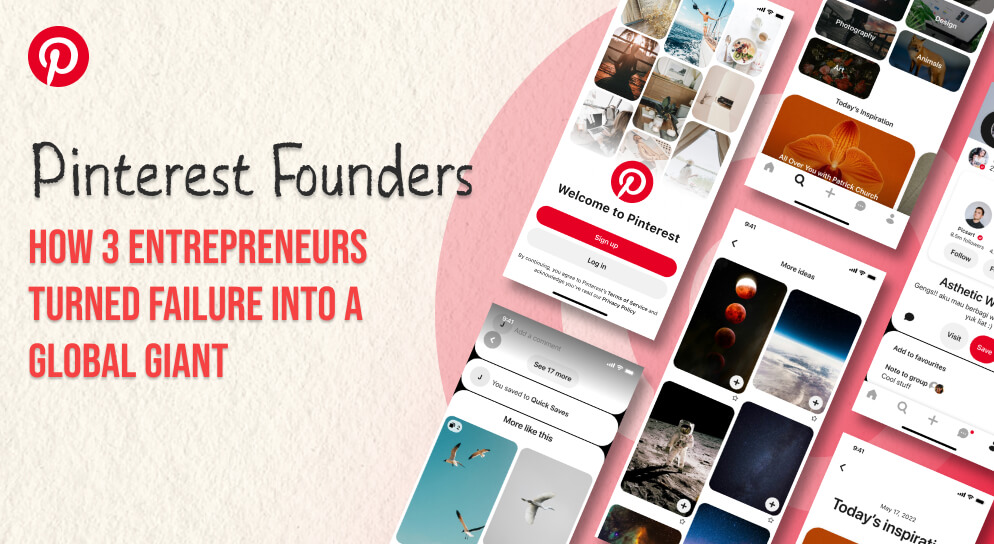
They had no coding degrees and worked from a small apartment. However, they transformed their failed shopping app, Tote, into a visual discovery app now used by 661 million users per month. (Source: Yahoo Finance)
Although most people believe that billion-dollar tech companies are created by genius Computer Scientists working in huge offices, this couldn’t be further from the truth.
Pinterest’s story is a classic bootstrap story. Give up your secure job, fail with your first idea, run out of cash, and hustle to get one user at a time until the world takes notice.
Who Are The Pinterest Founders?
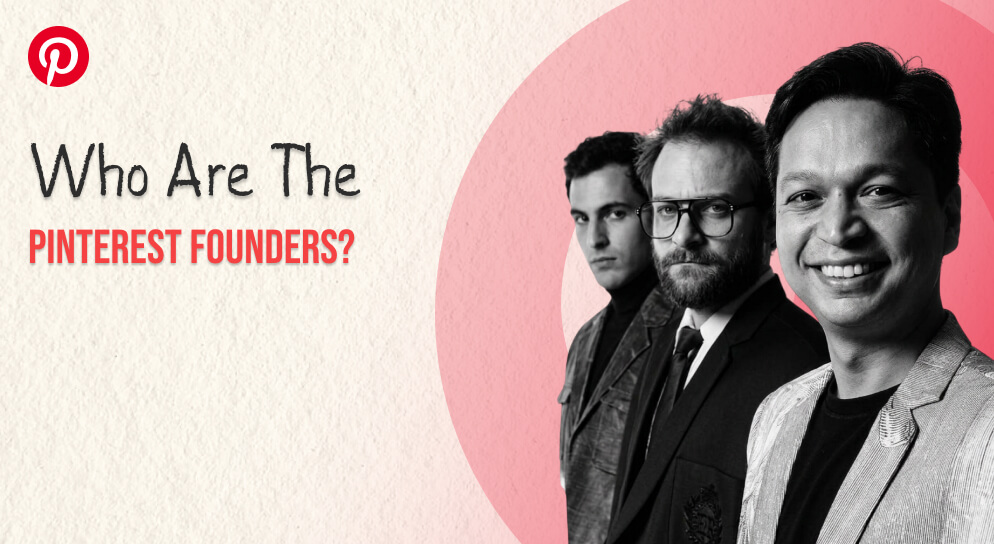
The three Pinterest founders each brought a completely different skill set.
None of them was a traditional computer science engineer, which proves you do not need a tech degree to build a massive online business.
| Founder Name | Education & Background | Job Before Pinterest | Main Role at Pinterest |
|---|---|---|---|
| Ben Silbermann | Political Science (Yale University) | Customer Support & Product Specialist at Google | Co-Founder & CEO (led vision and user growth) |
| Paul Sciarra | Economics & Political Science (Yale University) | Finance and Venture Capital | Co-Founder (led business operations and funding) |
| Evan Sharp | History & Architecture (Univ. of Chicago & Columbia) | Architecture Student & Product Designer | Co-Founder & Chief Design Officer (built the iconic grid layout) |
Together, they formed a balanced team. Silbermann understood what everyday users wanted.
Sciarra knew how to handle business math and talk to investors. Sharp knew how to make a website look clean, visual, and easy to use.
Side-Hustle Takeaway
You do not need to master every skill yourself. If you are great at talking to customers but bad at design or accounting, partner with a friend whose strengths cover your weaknesses.
Before Pinterest: The Childhood Habit Of Pinterest Founders That Sparked Everything
To understand why Pinterest exists, we need to look into Ben Silbermann’s childhood. Ben was born into a family of Doctors. They were located in Des Moines, Iowa.
Everyone expected him to follow the same path, and he even took pre-med classes in College.
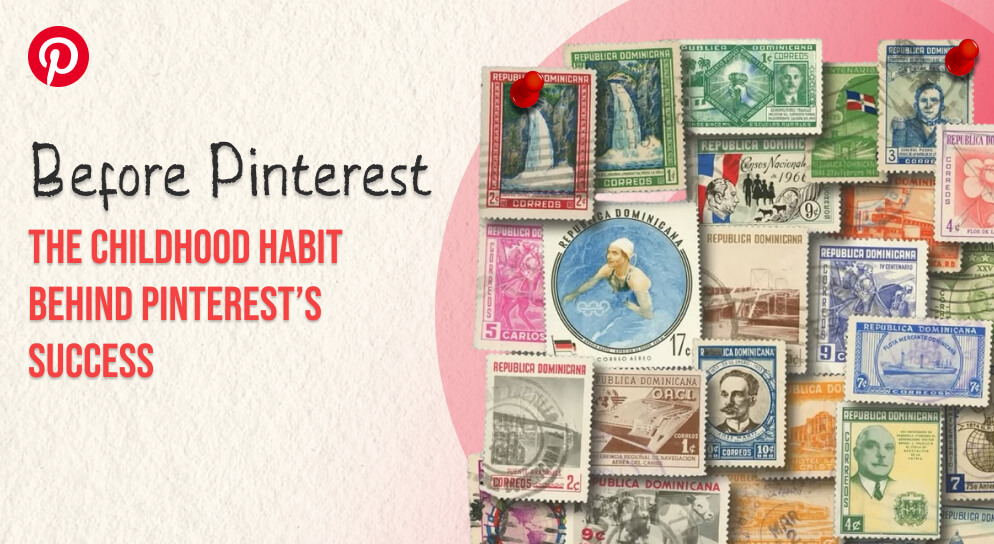
As a child, Ben loved to collect things. Stamps, leaves, and dead insects. He loved pinning them to cardboard and sorting them into categories. (Source: Forbes)
Ben believed your collection says a lot about who you are.
However, during his junior year of college, Ben realized he had no interest in becoming a doctor.
He moved to California and started working at Google in 2006. But this was not anything exciting. Moreover, he worked in customer support for Google’s online advertising department.
He mostly replied to emails and looked at spreadsheets.
Ben really wanted to create something. But Google wouldn’t let him work with their engineers as he didn’t have a degree in Computer Science.
So he took a massive risk.
Side-Hustle Takeaway
Your best business idea is often hiding in your childhood hobbies or everyday habits.
Moreover, look at what you already love doing for free. Chances are, millions of other people love it too.
How the Pinterest Founders Met and Started Their Hustle
During the global financial crisis in 2008, Ben Silbermann left his secure and high-paying job at Google. (Source: Forbes)
With no major funding, an office, or a complete product, he freelanced, designing iPhone Apps to cover his rent. He used this time to develop business ideas.
He joined forces with his college friend, Paul Sciarra from Yale, who had a background in venture capital and finance.
They set up a small start-up called Cold Brew Labs in a small apartment in Palo Alto, California. (Forbes)
Shortly after, Ben met Evan Sharp through a mutual friend. Evan was studying Architecture at Columbia University in New York.
He was teaching himself to code websites. Ben and Evan hit it off straight away as they both loved minimalist designs, grid layouts, and collecting cool items from the internet.
Side-Hustle Takeaway
Do not wait for the “perfect time” or a giant bank balance to start. Use freelance work or your day job to pay your bills while you build your main project at night and on weekends.
The First Failure: What Happened To “Tote”?
Before Pinterest, the founders spent months developing a completely different app called Tote.
The app let women view clothes from their favorite stores on their iPhones and set up alerts to know when products went on sale.
All they had to do was buy the product straight from the app. However, no one actually bought anything!.
In 2009, smartphones were still pretty new. It wasn’t very easy to type your credit card details into a small screen. Apple Pay hadn’t been invented yet, so Tote didn’t take off as a shopping app. The founders ran out of money.
The Pivot That Saved Them
After this setback, Ben and Paul looked more closely at how users were using Tote.
While they weren’t purchasing clothing, they spent hours building a library of pictures and sharing them with friends (Business Insider).
Ben realized people didn’t want to buy things in a shopping basket; they wanted a digital notice board to store ideas.
This included dream houses, wedding dress looks, recipes, and holiday plans.
The team shut down Tote in December 2009 and built a desktop site around this behavior.
Moreover, Ben’s wife, Divya, came up with the name Pinterest, which combines the words Pin and Interest.
Side-Hustle Takeaway
Watch what your customers actually do, not what you planned for them to do. If people ignore 90% of your product but love one small feature, cut the rest and build your business around it.
How Pinterest Got Its First 10,000 Users (Zero-Budget Playbook)
Pinterest was officially launched as an invite-only platform in March 2010.
Despite what you may think, Silicon Valley investors didn’t initially receive the idea positively.
Ben and Paul were rejected by dozens of venture capitalists because none of them understood why people would want to use a digital scrapbooking platform.
After nine months, Pinterest only had around 10,000 users, which most tech start-ups would consider a complete failure (Business Insider).
As they didn’t have any money to advertise their service via television or billboards, the team behind Pinterest used some very clever and inventive methods to increase their user base:
1. Apple Store Guerrilla Hack
Firstly, Ben Silbermann would go into local Apple Stores within Palo Alto.
He would go up to each display MacBook and open Pinterest on all of them. This meant when customers entered the store to try the laptops, they would see Pinterest first.
2. Gave Away His Personal Number
Second, Ben personally sent welcome emails to the first 5,000 Pinterest users. At the bottom of the email, he included his personal mobile number.
He then asked users to contact him if anything went wrong. He would also meet local users at cafes to see how they were using the site.
3. Pin It Forward
Third, Ben contacted some popular designers and craft bloggers. He invited them to Pinterest early, then asked them to create a pin board and invite two blogger friends. This created a viral effect.
4. Create Scarcity
As their low-cost servers would crash if too many people joined at once, they kept Pinterest invite-only for over a year.
This, however, accidentally created a desire to join the site as people had to be placed on a waiting list.
By 2011, things started to blow up. They launched an iPhone app, secured funding from big investors, and became the fastest standalone website to hit 10 million unique monthly visitors.
Side-Hustle Takeaway
Do things that do not scale. You don’t need an ad budget to get your first 100 customers.
Send personal DMs, answer every comment, and treat your earliest supporters like VIPs so they tell their friends about you.
Pinterest Growth Timeline: From Apartment To Billion-Dollar Company
Here is a look at how quickly Pinterest experienced success:
2008: Ben Silbermann leaves Google to create Cold Brew Labs with Paul Sciarra.
2009: Tote was created but was ultimately unsuccessful. They met Evan Sharp and decided to pivot to Pinterest in December.
March 2010: The official closed beta website launched with the now iconic grid design made by Evan Sharp.
2011: The official Pinterest app was launched. They raised $27 million with a $200 million valuation.
April 2019: They went public on the New York Stock Exchange (NYSE: PINS) with a valuation of over $10 billion. (Source: Business Insider).
2026: They have revenue of over $4.2 billion and had a record of 661 million active users per month. (Source: Pinterest Investor Relations).
Side-Hustle Takeaways
You will experience slow growth in the beginning. It took them nine months to reach 10,000 users. Most people give up after the second month.
Where Are The Pinterest Founders Now?
All three founders have all moved into new passions: health and futuristic tech. Here is what they’re all currently doing:
• Ben Silbermann (Chairman & Philanthropist)
Ben stepped down as Pinterest’s CEO in June 2022 and passed the reins to former Google executive Bill Ready.
Moreover, Ben still sits on Pinterest’s board of directors, runs philanthropy projects through his family foundation, Tambourine, and has a net worth of $1.7 billion (Source: 311 Institute).
• Evan Sharp (Design Leader & Creative Adviser)
Evan left Pinterest’s full-time position as Chief Design Officer in late 2021 to work at LoveFrom, the famous creative company founded by former Apple designer Jony Ive.
Moreover, Evan then co-founded venture studio West Co. and works as a creative adviser.
• Paul Sciarra (Chairman of Electric Air-Taxi)
Paul left Pinterest in early 2012 to look into new investments.
He later became the first outside investor and Executive Chairman of Joby Aviation, one of the leading companies creating electric vertical takeoff and landing (eVTOL) air taxis. (Source: Joby Aviation)
Side-Hustle Takeaway
Building a successful project gives you freedom for life. Once your hustle succeeds, you can hire managers to run the daily operations while you move on to new ideas.
How Pinterest Makes Money Today (Turning Free Ideas Into Billions)
One mistake many people make when starting a side hustle is worrying about making money.
In Pinterest’s first four years (2010-2014), they made $0. They completely focused on creating a product that people would love to use every week.
Once their product had millions of users planning their weddings, redecorating their bedrooms, and shopping for outfits, they created a clever business model that didn’t affect the user experience:
1. Promoted Pins (Advertising)
Businesses and small businesses pay Pinterest to promote their products. This means people can see these products when searching for what they want.
Because people go to Pinterest with purchase intent, the advertising doesn’t feel intrusive.
2. Shopping
Online stores will upload their whole product catalogs onto Pinterest. If you click on a lamp or jacket you love, you can purchase it from the brand’s website in 2 taps.
3. Partnerships with Creators & Merchants
Pinterest works with big retailers and everyday content creators to create content to help sell their products. This includes reviews, DIY guides, and style guides.
Side-Hustle Takeaway
Build trust and solve a real problem before you try to sell hard. Whether you are growing a newsletter, a YouTube channel, or a small app, an engaged audience is much easier to monetize than cold traffic.
Final Takeaway
The story of Pinterest’s founders shows you really don’t need millions, a swanky Silicon Valley office, and a computer science degree to create something huge.
It all began with a failed shopping app, a small apartment, and the desire to speak to their first 5,000 users.
If you’re finding your side hustle slow and messy, know that Pinterest took nine months to reach its 10,000th user.
Keep listening to your audience, make changes, and keep working toward your goal so your hard work pays off.